
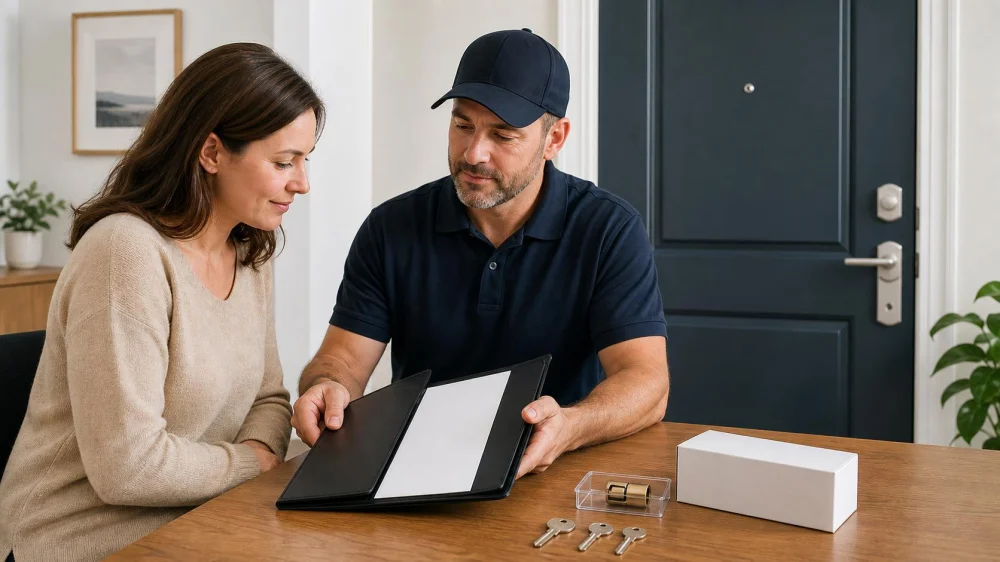
Locksmith Service Record: Save Parts, Keys, and Warranty
On this page
Quick answer
After locksmith work, save the company and technician details, service date, authorized scope, each door or device serviced, hardware manufacturer and model, parts installed, number of keys issued, key-control restrictions, old-part disposition, labor and material charges, warranty terms, and follow-up contact. Test every opening from both sides before sign-off and store security records separately from spare keys.
This documentation guide is for authorized US property owners and managers. Local licensing, rental, privacy, and fire-code requirements vary.
Record before work
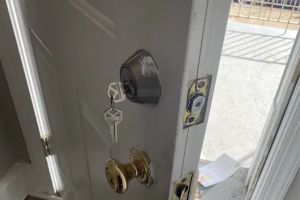
Start with written authorization and a clear opening list. Photograph the door, frame, lock, strike, hinges, and existing damage. Give each opening a neutral identifier such as Front A or Office 2 rather than relying on “the blue door.”
Record the reported problem in observable terms: key turns only halfway, latch misses the strike, lever sags, cylinder rotates, or electronic lock loses power. Do not ask for only a “new lock” when alignment or door condition might be contributing.
Confirm estimate format, service-call charge, emergency or after-hours fees, parts authorization threshold, payment methods, and who may approve additional work. For a rental or managed property, document owner or manager permission before changes.
2 Brothers Locksmith
Sterling HeightsMacomb CountyMichigan
40855 Jellico Dr, Sterling Heights, MI 48313, USA
What the invoice should identify
- business name, contact information, and applicable license number;
- service date, arrival and completion time, and technician identity;
- each opening or device serviced;
- whether work was adjustment, repair, rekey, key cutting, programming, or replacement;
- manufacturer, model, finish, keyway or credential family when useful, without exposing sensitive codes;
- quantity and description of installed parts;
- number of keys, fobs, cards, or credentials delivered;
- itemized labor, materials, tax, and other charges;
- warranty duration, exclusions, claim process, and who supplies labor;
- recommended follow-up work and conditions not corrected.
A card receipt alone is not a service record. Ask for a readable invoice before the technician leaves. If a part is substituted, have the final document name what was actually installed.
Closeout checklist
- Count credentials. Match every key, fob, and card to the invoice.
- Test from both sides. With the door open first, operate every key, thumbturn, lever, latch, deadbolt, and exit device.
- Test the closed door. Confirm latching and locking without lifting, pushing, or slamming unless that operation is part of the approved design.
- Check egress. Occupants must be able to exit as required without searching for a key or receiving new instructions that conflict with code.
- Review electronic access. Confirm administrator ownership, remove temporary codes, test backup entry, and record battery type without writing active access codes on the invoice.
- Identify old parts. Decide whether removed cylinders, keys, and electronics are returned, securely destroyed, or retained by the provider.
- Photograph completion. Capture installed hardware and repaired door condition without publishing key details.
Do not accept a test performed only with the door open. Alignment under the closed-door load matters. Also test that weather stripping, closer action, and accessibility are not impaired.
Store records securely
Keep invoices, hardware manuals, warranty terms, access maps, and issue history in a restricted property file. Store spare keys elsewhere in a controlled cabinet or safe. A stolen folder should not immediately reveal both the address and the location of every credential.
Do not photograph key blades closely or store active codes in an ordinary shared note. Use an approved credential manager with role-based access. Record who received each credential, when it was returned, and when access was revoked.
For electronic locks, document who controls the administrator account, recovery method, app ownership, and transfer process. Use the manufacturer's supported reset and ownership-transfer procedure when staff, tenants, or managers change.
If a problem appears
Stop using a lock if it traps someone, prevents required exit, leaves a door unsecured, or damages the key. Photograph the symptom without forcing the mechanism and contact the provider with the opening ID, service date, invoice, and exact behavior.
Do not spray an unknown lubricant, file a new key, or disassemble warranty hardware before asking. Those actions can obscure the cause or affect coverage. For urgent life safety or an occupied lockout, call emergency services or the appropriate authorized response first.
FAQ
Should the invoice include key codes?
Not necessarily. Sensitive bitting or programming data should be controlled. Ask how future authorized service will verify and retrieve needed information securely.
Can I keep the removed cylinder?
Ask before work. Ownership and safe handling vary; a cylinder may still operate old keys and should not be discarded casually.
What if the door still needs to be pushed to lock?
Record the condition and ask whether alignment, hinges, strike, frame, or weather stripping needs correction. Do not accept unexplained force as normal.
How many spare keys should I order?
Issue only the number required for authorized users and controlled backups. Extra untracked copies increase loss and return problems.
Is a verbal warranty enough?
Request written duration, covered parts and labor, exclusions, and claim steps. Save it with the final paid invoice.
Next steps
Before sign-off, match the invoice to every serviced opening, count credentials, and test open-door and closed-door operation. Save the final photos, manuals, and warranty in a restricted file, then update the credential log.
Evidence note: This article reflects general service documentation, access control, and life-safety principles. The installed hardware, local rules, and authorized locksmith determine exact procedures.
 All Secured Security Services4.0 (201 reviews)
 KeyMe Locksmiths4.0 (127 reviews)
 KeyMe Locksmiths4.0 (5 reviews)
 KeyMe Locksmiths4.0 (80 reviews)
 Broken Key Removal canton1.0 (1 reviews)
 KeyMe Locksmiths4.0 (13 reviews)
 How to Secure Front, Back, and Side Doors With Deadbolts
 The Importance of Upgrading Old Locks to Modern Security Standards
 Understanding the Different Types of Locks and Their Uses
 How to Upgrade Your Business Security Without High Costs
 The Benefits of Master Key Systems for Business Security
 How To Choose the Right Locksmith for Your Home Security Needs