
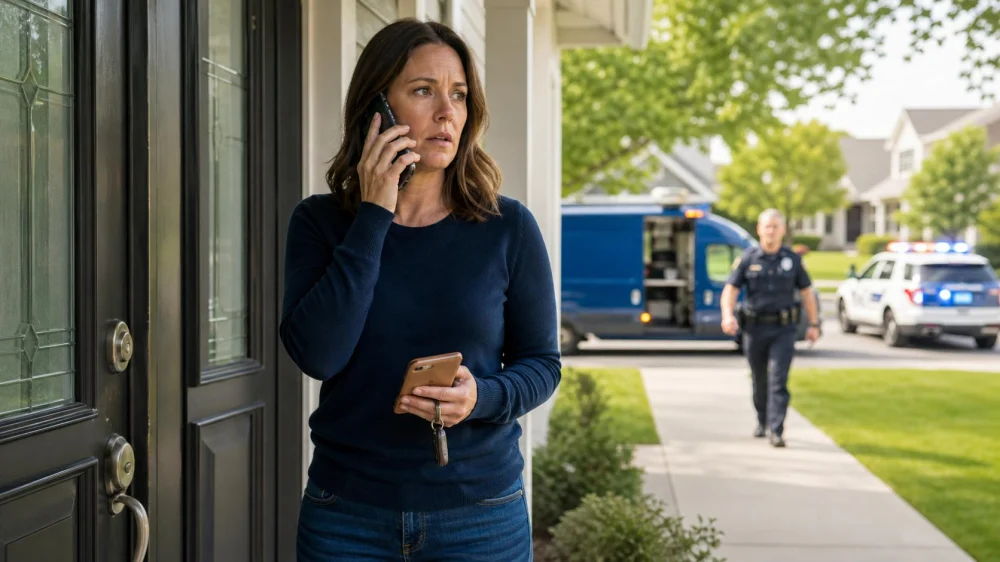
Locked Out With Someone Vulnerable Inside? Call for Emergency Help First
On this page
- Quick answer
- Call emergency services when safety is uncertain
- Keep contact without giving unsafe instructions
- Report environmental and medical hazards
- Check authorized access without delaying help
- Avoid improvised or hazardous entry
- Coordinate the locksmith with responders
- Verify the locksmith and price
- Check health and document the event
- Build a safer lockout plan
Quick answer
If a child, vulnerable adult, medically dependent person, or pet is locked inside a home or vehicle, call 911 when there is any immediate or uncertain danger. Heat, cold, fire, cooking, water, medication, falls, medical equipment, distress, and inability to respond can turn a lockout into an emergency. Tell the dispatcher the exact location, who is inside, what you can see or hear, and all known hazards.
Stay on the line, follow responder instructions, and keep visual or voice contact if safe. A locksmith can support access, but emergency services—not price shopping—take priority when health or life may be at risk. Do not attempt a dangerous climb, enter traffic, break glass, or coach a child to operate appliances or complex locks unless the dispatcher specifically directs an action.
Call emergency services when safety is uncertain
Call immediately if the person is unresponsive, cannot communicate, has breathing difficulty, is injured or confused, relies on powered medical equipment, or may reach a stove, bath, pool, weapon, chemical, medication, balcony, or open flame. For a vehicle, heat and cold can become dangerous quickly even when outdoor conditions seem moderate.
The National Highway Traffic Safety Administration’s child heatstroke guidance tells bystanders who see a child alone in a locked vehicle to act immediately and call 911. Do not wait for a locksmith arrival estimate before involving emergency responders.

Keep contact without giving unsafe instructions
Stand where the person can see or hear you without entering traffic, climbing, or leaving another child unattended. Speak calmly and use simple directions such as staying in one safe place and moving away from a hazard when the person can understand. Tell the dispatcher what the person is doing and whether their response changes.
Do not ask a young child or confused adult to use a stove, chair, knife, window, garage mechanism, deadbolt, or unfamiliar smart-home control. Avoid shouting multiple instructions through different doors. One adult should communicate while another meets responders and provides access information.
Report environmental and medical hazards
Tell responders about indoor temperature, direct sun, vehicle engine status, smoke or alarms, running water, cooking, gas odor, medications, firearms, aggressive animals, pools, stairs, oxygen equipment, and relevant medical conditions. Give the person’s approximate age, mobility, communication ability, and last known condition.
Do not enter a building with smoke, gas odor, carbon-monoxide alarm, visible electrical hazard, or structural damage. Move to a safe distance and warn neighbors when directed. A lockout does not make the surrounding hazard safe.
Check authorized access without delaying help
While one person remains with the dispatcher, another can contact an authorized nearby key holder, building manager, security desk, roadside service, vehicle manufacturer emergency service, or monitored access provider. Use only accounts and credentials you are authorized to control. Give responders the estimated arrival time and access route.
Do not search publicly for hidden keys or post access details online. Do not ask a neighbor to retrieve a key from an unsafe place. A remote unlock, garage entry, or spare key is useful only if it works promptly and does not cause someone to cross a hazard.
Avoid improvised or hazardous entry
Do not use lock-picking tools, pry bars, cards, drills, wire, rooftop access, or unstable ladders. These attempts can damage the door, disable a safe opening method, injure the person inside, or delay responders. Breaking vehicle or door glass creates sharp fragments and may not give safe access to a restrained child or animal.
Emergency responders may direct or perform forced entry based on the immediate risk and local law. Follow their instructions rather than attempting it independently. Keep bystanders away from any planned entry point.
Coordinate the locksmith with responders
Tell the locksmith dispatcher that a vulnerable person is inside and that emergency services have been called. Provide the property type, door or vehicle description, known lock type, address, safe parking instructions, and whether responders are on scene. Ask for a realistic arrival estimate and the technician’s identifying details.
When responders arrive, let them control the scene and decide whether waiting for non-destructive locksmith access is appropriate. A locksmith should not obstruct fire, medical, law-enforcement, or roadside personnel. If rapid forced entry is required, access preservation becomes secondary.
Verify the locksmith and price
For a non-life-threatening lockout, verify the company name, local presence, technician identity, license where required, vehicle identification, service-call fee, labor range, after-hours charge, and conditions that could change the quote. Ask whether non-destructive entry will be attempted before drilling or replacing hardware.
Expect the locksmith to request reasonable proof of identity and authority once the person inside is safe. In an emergency, police or property management may help establish authority. Refuse unexplained cash-only demands, a blank work order, or drilling without a clear reason and revised price unless responders require immediate entry.
Check health and document the event
Let medical responders assess the person when requested, especially after heat or cold exposure, breathing symptoms, a fall, distress, altered alertness, or an extended vehicle lockout. Do not assume someone is fine because they can speak. Follow veterinary guidance for a pet exposed to heat, cold, or breathing difficulty.
Photograph damage, save the locksmith invoice, record response times, and list keys or access methods used. Replace or repair compromised hardware promptly and obtain temporary security if the door cannot lock. Notify the landlord, property manager, insurer, care agency, or vehicle provider as required.
Build a safer lockout plan
Give an authorized local person a controlled spare, keep emergency numbers available without relying on the locked phone, and review building or vehicle remote-access services before they are needed. Test smart-lock batteries and backup methods according to the manufacturer. Never hide keys in an obvious public location.
Keep vehicle keys and fobs out of children’s reach and lock unattended vehicles so a child cannot climb inside. For home care, document who may enter, where approved backups are stored, and how responders can be met. Practice the communication plan without rehearsing bypass methods.
 Minute Key4.0 (4 reviews)
 Minute Key5.0 (4 reviews)
 KeyMe Locksmiths3.0 (8 reviews)
 Minute Key4.0 (7 reviews)
 KeyMe Locksmiths0.0 (0 reviews)
 KeyMe Locksmiths4.0 (17 reviews)
 The Benefits of Smart Home Security Integration with Locksmith Services
 Locksmith Near Me in Des Moines IA for Reliable Locksmith Help
 Reliable Locksmith Near Me in Phoenix AZ for Same Day Service Guide
 How to Find a Trustworthy Locksmith Near Me During Emergencies – Safe Hiring Guide
 How to Choose the Right Locksmith for Your Emergency Needs
 The Risks of Using Locksmith Services Without a Performance Bond