
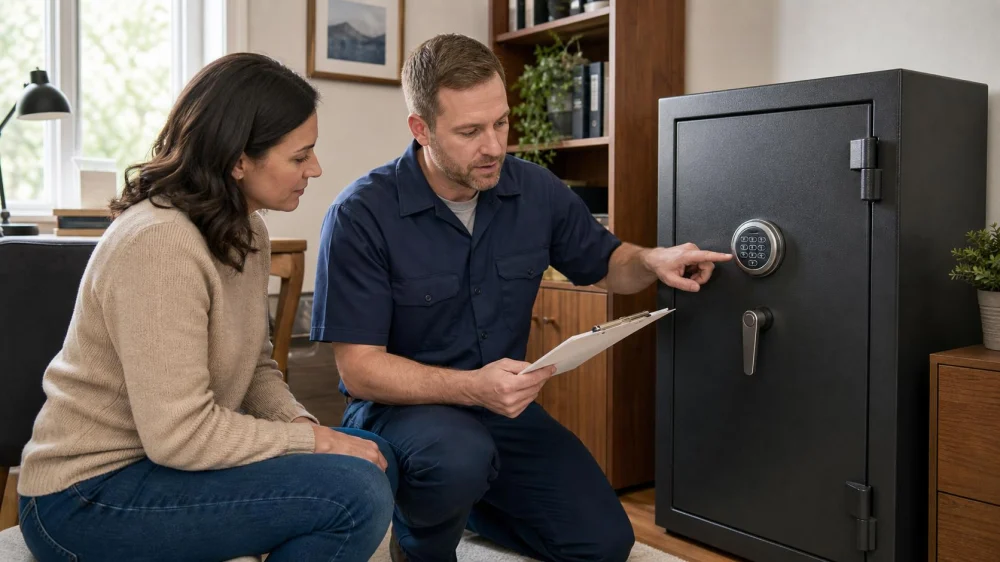
Home Safe Lockout: What to Gather Before Calling a Pro
On this page
Quick answer
When a home safe will not open, stop repeated code entries and avoid drilling, prying, striking, or guessing at internal procedures. Record the symptoms, find the model and ownership documents without posting serial numbers publicly, and check the manufacturer’s user instructions. Then contact the manufacturer, authorized safe technician, or qualified locksmith who services that safe type and can verify your authority.
A safe lockout means an authorized user cannot open a safe through its normal operating method. The cause may involve user procedure, power, lock components, bolt pressure, damage, or a relocking condition; the outside symptom alone does not identify which one.

Stop and assess the situation
Pause before turning an inconvenience into equipment damage. Repeated attempts may trigger a timed lockout on some electronic locks, drain a weak power source, or make it harder to describe the original symptom.
Without dismantling anything, note:
- Whether the lock is electronic, mechanical dial, keyed, or a combination of methods.
- What changed before the failure, such as a move, impact, battery warning, long period without use, or recent code change.
- Whether there are lights, beeps, display activity, unusual handle movement, or complete silence.
- Whether the door is fully closed, visibly damaged, or under pressure from overfilled contents.
- How many attempts were made and whether the behavior changed.
If the safe contains a firearm, medication, hazardous material, critical document, or item needed for an immediate safety emergency, explain that fact to the appropriate emergency authority or qualified service provider. Do not leave the area unsecured or attempt a forceful opening method.
Information to gather before service
A prepared service request helps the provider confirm whether it works on the equipment and what authorization it requires.
- Proof of ownership or authority. Gather a purchase record, registration, estate or business authorization, property document, or other evidence appropriate to the situation.
- Safe manufacturer and model. Use paperwork or exterior information visible without removing panels. Do not share a full serial number in public messages or review sites.
- Lock type and normal opening method. State whether you normally use a dial, keypad, key, app, or multiple steps. Never send a working combination or PIN through an unverified channel.
- Symptom timeline. Write down the last successful opening, first failure, alerts, sounds, and any approved maintenance already attempted.
- Installation details. Note whether the safe is freestanding, bolted down, built in, upstairs, behind finished cabinetry, or located where access is limited.
- Urgency and contents category. Describe why timing matters without listing valuable contents in unnecessary detail.
- Photos of the exterior. If the provider requests them through a verified channel, frame the safe and lock without exposing codes, serial numbers, addresses, keys, or other security details.
Keep the gathered information in a private record. A technician may still need to inspect the safe in person before recommending a method or final price.
Choose the right service path
Manufacturer or authorized support
Start here when warranty coverage may apply, the safe uses a proprietary electronic system, replacement credentials are controlled, or the manual identifies an authorized service network. Use contact information from the manufacturer’s official documentation or website, not an unsolicited message.
Safe technician or locksmith with safe experience
Choose a provider who specifically confirms experience with safes and the lock type involved. General door-lock service does not automatically mean safe-opening, safe-moving, or safe-repair expertise. Ask how authorization is verified and whether the provider can repair and secure the safe after access.
Safe mover or installer
If access is obstructed, the safe was damaged during a move, or it must be repositioned, a trained safe mover may need to coordinate with the lock technician. Safes are heavy and can tip, crush, or damage floors; do not attempt to drag or tilt one casually.
Emergency services
A routine lockout is not necessarily an emergency. Contact emergency services when there is an immediate threat to life or public safety, and follow their directions. Clearly describe what is inaccessible rather than attempting to open the safe while waiting.
Questions to ask before approving work
- Do you service this manufacturer, model family, and lock type?
- What proof of ownership or authority will you require?
- Is there a service-call or diagnostic fee, and what could change the estimate?
- Will you explain the proposed access method and likely repair consequences before beginning?
- Can the safe and lock usually be returned to secure working condition after access?
- Are replacement parts available, and are they covered by a separate warranty?
- How will drilling dust, floor protection, cabinetry, alarms, and surrounding property be handled?
- Will you provide a written invoice identifying the work and installed parts?
“Non-destructive” should not be treated as a guaranteed outcome before inspection. The least invasive appropriate approach depends on the failure, safe construction, security features, and the technician’s authorized service information. Ask for an explanation of options and tradeoffs, not a promise that ignores the actual condition.
Limitations and important notes
- This article helps an owner prepare for authorized service; it does not provide bypass, decoding, manipulation, drilling, or forced-entry instructions.
- Do only the external checks expressly described in the safe’s official user instructions. Do not probe ports, remove labels, energize unknown contacts, or improvise battery connections.
- Warranty, registration, licensing, and technician requirements vary by manufacturer, service provider, safe type, and U.S. jurisdiction.
- Do not disclose combinations, PINs, recovery codes, full serial numbers, addresses, or detailed valuables in public posts.
- An open safe with a malfunctioning lock is not restored security. Arrange repair or controlled storage rather than continuing to use it unsecured.
Sources and evidence notes
The preparation steps reflect common professional service practice: preserve the equipment, document symptoms, confirm the exact product, verify authority, select a provider with relevant safe experience, and agree on scope before invasive work. Specific troubleshooting and service procedures must come from the safe manufacturer or an authorized qualified technician.
Useful records include the official user manual, purchase or registration documents, prior service invoices, lock or safe model information, installation records, and a private symptom timeline. These records support diagnosis without publishing sensitive security data.
Frequently asked questions
Should I keep entering the code until the keypad responds?
No. Stop after unexpected behavior and consult the official instructions. Some locks impose delay periods or respond differently after repeated entries, and continued attempts can complicate troubleshooting.
Can I replace the safe battery myself?
Only follow the external battery procedure in the exact model’s official user instructions. Battery location, polarity, approved type, and access method differ. Do not remove lock components or apply power to unidentified contacts.
Will a locksmith open any home safe?
Not every locksmith services every safe or lock. Confirm safe-specific experience, authorization requirements, parts access, and the ability to repair the unit afterward.
Does the technician need to know what is inside?
Usually the provider needs enough information to assess urgency, hazards, and legal authority, not an inventory of valuables. Disclose hazardous or safety-critical contents privately because they may change how the work is planned.
Should I move the safe outside before service?
Not unless a qualified provider has planned the move. A safe’s weight, anchoring, stairs, floor capacity, and center of gravity can create serious injury and property risks.
Next steps
Stop further opening attempts, secure the surrounding area, and create a private note with the model, lock type, symptoms, last successful opening, and available ownership records. Check the official manual, then contact the manufacturer or a verified safe-experienced professional. Approve work only after authorization, scope, likely damage, repair plan, and pricing terms are clear.
 KeyMe Locksmiths4.0 (88 reviews)
 Rightway Lock & Key3.0 (6 reviews)
 KeyMe Locksmiths3.0 (2 reviews)
 Minute Key4.0 (8 reviews)
 Auto Lock Specialists4.0 (140 reviews)
 KeyMe Locksmiths4.0 (16 reviews)
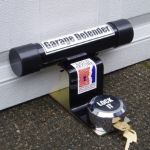 How to Protect Your Garage From Theft Using Advanced Locks
 The Benefits of Installing a Smart Lock on Your Garage Door | Locksmith Finder
 How to Protect Your Business from Break-Ins: Locksmith Solutions
 How to Secure Sliding Glass Doors With Smart Locks and Deadbolts
 How to Protect Your Home From Burglars With Layered Security
 How to Protect Your Home From Lock Picking Tools