
Lock Rekey Closeout: Test Every Key and Record the Handoff
Table of contents
Quick answer
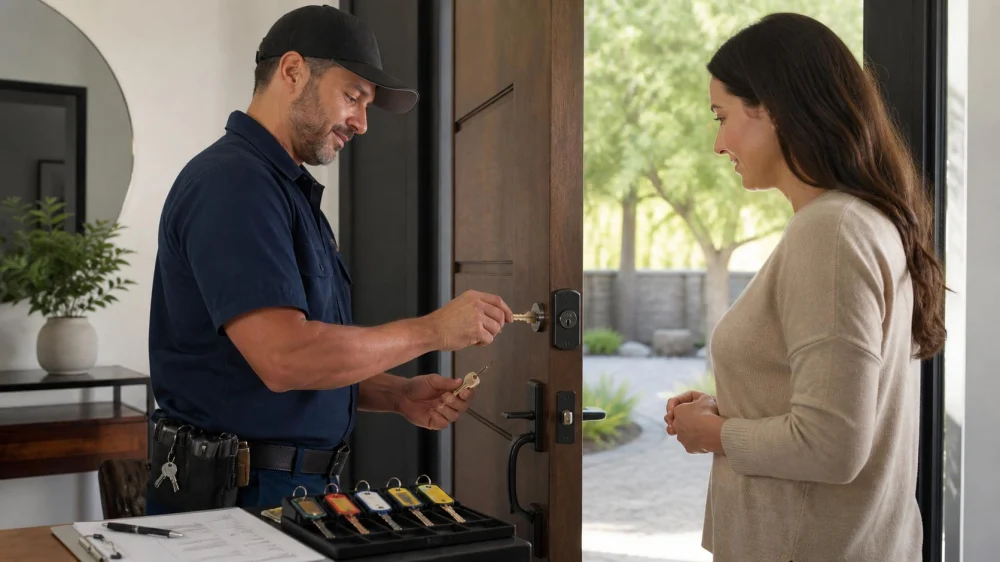
Before the locksmith leaves, compare every lock with the agreed scope, test each new key from both sides where applicable, and confirm that latches and deadbolts work with the door open and closed. Count all copies, identify which old keys no longer work, and document any master-key or keyed-alike arrangement without exposing key codes. Keep the invoice, warranty, and authorized contact details securely.
Confirm the scope
Rekeying changes the internal keying of a compatible lock so a different key operates it. It is not the same as replacing the entire lock. At closeout, verify whether the job was a rekey, cylinder replacement, complete hardware replacement, repair, or combination.
Walk through the original list with the technician. Identify each exterior door, interior restricted area, gate, mailbox, garage entry, padlock, and detached building that was in scope. Do not assume a lock was included because it looks similar.
Confirm the intended keying plan. “Keyed alike” means selected locks use the same operating key. Different keys may be intentional for a rental, office, storage room, or service entrance. A master-key system has additional security and authorization implications and needs precise records.
Ask which existing hardware was retained and which parts were replaced. Note visible damage, finish differences, and any recommended door-alignment work. A rekey cannot correct a sagging door, loose hinge, damaged frame, or weak strike attachment.

Test every opening
Test with the door open first. Insert the key fully, turn it without excessive force, extend and retract the bolt, and remove the key in the intended position. Then close the door and repeat while standing on the safe side with another authorized person able to assist.
Check:
- Every supplied key in every lock it should operate
- Locks the key should not operate
- Interior thumbturns and exit hardware
- Latch engagement without lifting or pushing the door
- Deadbolt extension into the strike
- Key removal in the correct position
- Door closer or self-closing action when present
- Smart-lock manual override if included in the agreed work
Do not lock yourself outside during testing. Keep one verified key with an authorized person, and avoid testing an emergency exit in a way that obstructs egress. Commercial, multifamily, fire-rated, and accessibility-regulated doors can have specific hardware rules.
If a key binds only when the door is closed, the issue may be alignment rather than the new cylinder. Show the technician the exact motion. Do not force the key or lubricate a new lock with an unapproved product.
Count and label keys
Count physical keys at the handoff and compare the number with the invoice. Test each copy; duplicate keys can vary slightly. Separate temporary contractor keys, tenant keys, owner keys, and restricted blanks according to the access plan.
Use a neutral identifier that does not reveal the address or door if the key is lost. A code such as “B-2” is safer than a tag with the full street address. Store the code legend separately and limit access.
Ask whether additional copies require a particular blank, authorization card, locksmith, or manufacturer process. “Do not duplicate” markings and restricted-key controls have different legal and practical effects by system and location. Record the actual duplication policy.
Collect old keys that are no longer needed, but do not discard them until testing confirms the transition. Some old keys may still operate locks that were intentionally excluded. Dispose of obsolete keys so they cannot be casually recovered, following organization policy.
Review the invoice
The invoice should identify the business, technician or service reference, date, service address, work performed, quantities, hardware or cylinder model when relevant, labor, service call, tax, and payment. Compare agreed prices before signing.
Ask about warranty coverage and exclusions. A workmanship warranty may differ from a manufacturer hardware warranty. Door movement, misuse, unauthorized duplication, weather, and preexisting damage may not be covered.
Resolve unexpected drilling, replacement, or surcharges before the technician leaves. Request a clear explanation and itemization. Do not sign a blank or materially inaccurate work order. For a disputed or pressured transaction, pause and use the applicable consumer-protection or payment process.
Confirm whom to call if a key stops working and whether after-hours service has separate pricing. Save the verified business contact from an independent source rather than only a number printed on an unverified sticker.
Secure the records
Keep the invoice and keying schedule in a secure property record. Do not photograph keys at high resolution or post key codes, bitting, authorization cards, or lock details publicly. Limit the access list to people who need it.
Update emergency, tenant, employee, cleaner, caregiver, and contractor access according to the authorized process. Rekeying is incomplete as an operational change until people know which old access ended and how new keys are issued.
Record each key recipient, date, key identifier, and return requirement. Avoid collecting unnecessary personal information. For a business or rental, follow applicable privacy, employment, tenancy, and access-control rules.
Schedule a follow-up check after the doors have been used. Report new binding, loose trim, intermittent operation, or a key that works only with unusual pressure. Early correction can prevent a broken key or lockout.
Limitations
This checklist does not authorize entry, define locksmith licensing, or determine whether a lock meets fire, life-safety, insurance, accessibility, tenancy, or building-code requirements. Those rules vary by jurisdiction and property type.
Do not dismantle or bypass a lock you are not authorized to control. Use a verified licensed locksmith where required and consult property management or the relevant authority for regulated doors.
Sources and evidence
Consumer-protection principles include independently verifying a business, resisting pressure, reviewing the agreed charge, and protecting personal information. The US Federal Trade Commission provides general guidance on recognizing impersonation and repair-related scams and reporting suspected fraud; locksmith licensing and dispute rules remain local.
Frequently asked questions
Should every new key be tested?
Yes. Test each copy in each intended lock before distribution. A single duplicate may differ even when the original works.
Should old keys stop working after a rekey?
They should stop operating the rekeyed lock, but may still operate excluded locks. Verify the scope before disposal.
Why does the key work with the door open but not closed?
The bolt or latch may be misaligned with the strike. Show the technician and address door or frame movement rather than forcing the key.
Can all locks use one key?
Only compatible locks included in an intentional keyed-alike plan. Convenience must be weighed against access separation and loss consequences.
Should I photograph the keys for records?
A high-resolution image can expose useful duplication details. Record neutral identifiers and counts instead, and protect any necessary technical documentation.
What belongs on the receipt?
Business identity, date, address, itemized work, hardware, quantities, labor, fees, tax, payment, and warranty information should be clear.
Conclusion
A rekey job ends with controlled handoff, not the final turn of a screwdriver. Confirm every lock, test every new key, count copies, document access, and review the invoice and warranty. Protect keying details and update authorized users. That short closeout prevents avoidable lockouts, billing disputes, and uncertainty about who can open which door.

 Express Locksmith Lock n Key4.0 (74 reviews)
 KeyMe Locksmiths3.0 (3 reviews)
 KeyMe Locksmiths4.0 (101 reviews)
 Autodiagnerdz4.0 (51 reviews)
 KeyMe Locksmiths3.0 (12 reviews)
 Fitch Locksmith5.0 (16 reviews)
 Locksmith Tips for Choosing the Right Lock for Each Room
 Are Locksmith Near Me Services Available 24 Hours in All Cities
 How to Choose a Licensed Locksmith for Peace of Mind
 How to Protect Your Home from Lock Prying: Locksmith Tips
 The Importance of Rekeying Locks After a Tenant Moves Out
 How to Upgrade Your Business Security Without Major Renovations