
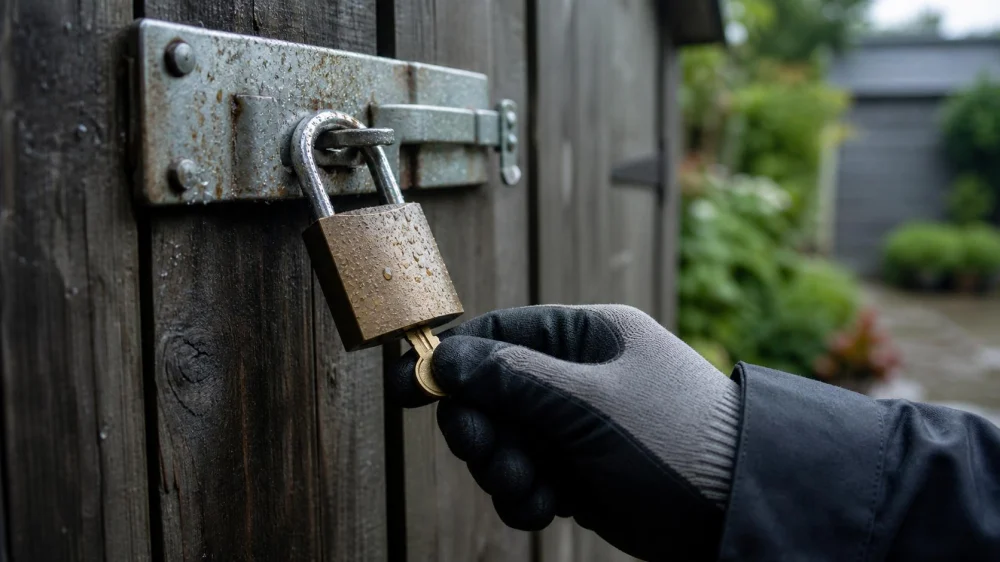
Outdoor Padlock Stuck: Safe Checks Before Replacement
Table of contents
Quick answer
Confirm you are authorized to open the lock and that no person, animal, hazardous system, or emergency resource is trapped behind it. Check whether the correct key fully inserts, the door or hasp is loading the shackle, or dirt, corrosion, or cold is involved. Use only the lock manufacturer's approved cleaner or lubricant and gentle alignment. Stop before bending keys, heating the lock, striking it, or cutting near hazards.
Verify authority and urgency
A padlock may secure a personal shed, rental gate, utility cabinet, workplace area, storage unit, trailer, or safety device. Ownership of the key does not always establish authority to remove or replace the lock. Check property, lease, workplace, facility, and storage-provider procedures first.
Do not troubleshoot a lock on a gas, electrical, fire, pool, chemical, machinery, medical, or utility enclosure unless authorized and trained. Tampering can expose dangerous equipment or violate law. Contact the responsible operator.
If a child, vulnerable adult, or animal is in immediate danger, or emergency equipment is inaccessible, call emergency services or the responsible facility instead of attempting a long repair. For an ordinary lockout, protect the area and use a verified locksmith.
Document the lock and surrounding hardware before work. Photograph damage, weather, corrosion, and how the hasp is loaded. In a rental or business, notify the authorized manager and record approval.
Identify the problem
Separate four symptoms. The key will not insert; the key inserts but will not turn; the cylinder turns but the shackle does not release; or the shackle opens but will not come free of the hasp. Each suggests a different place to look.
Confirm the correct key by neutral identifier, not by forcing several similar keys. Inspect it for bends, cracks, burrs, or heavy wear. Stop using a damaged key because it can break inside the cylinder.
Look at the lock body, keyway, shackle, hasp, chain, gate, and hinges. A sagging gate or packed storage door can pull sideways on the shackle. Corrosion can swell parts. Dirt can block the keyway. Freezing moisture can prevent movement.
Do not place fingers between a loaded gate and post. Wind, gravity, a spring, animals, or stored material can move the opening suddenly. Stabilize only in a way you are trained and authorized to use.
Try low-risk steps
Begin with pressure relief. With another authorized person if necessary, gently move the gate or hasp toward its normal aligned position while operating the correct key. Do not pry, kick, or pull so hard that hinges, posts, or hands are at risk.
Brush loose dry dirt from the exterior with a soft tool. Use only a cleaner, de-icer, or lubricant approved by the padlock manufacturer for that model and temperature. Household oils can collect dirt or damage internal materials; water-based products can refreeze.
Apply the minimum stated amount and wait as directed. Keep chemicals away from eyes, skin, ignition sources, food, pets, landscaping, and waterways. Never mix products. Wipe overspray from the ground and hardware according to the label.
In cold weather, move a removable lock to a safe warm dry location only if it is already open. Do not use a torch, open flame, boiling water, high-output heat gun, or electrical appliance outdoors. Heat can damage the lock, coating, contents, and nearby materials, while water can refreeze.
Turn the key with finger pressure, not pliers. Gently press the shackle down and then try the release motion specified by the manufacturer. Some locks require a deliberate push before springing open; others do not. Stop if the key flexes.
Know when to stop
Call a locksmith when the key is damaged, cylinder is seized, shackle remains loaded, corrosion is severe, or approved maintenance does not restore normal movement. Use a professional for restricted, high-security, alarmed, or unfamiliar systems.
Do not drill, grind, cut, or strike a padlock without appropriate authorization, training, protective equipment, and hazard assessment. Sparks and fragments can cause fire or injury, and the tool may damage the hasp, gate, contents, or utility behind it.
If forced entry or vandalism is suspected, preserve evidence and contact police, property management, insurer, or security team as appropriate before altering the scene. Photograph without touching damaged surfaces more than necessary.
When a locksmith arrives, verify the company independently, confirm authorization requirements, agree on price and method before destructive work, and request an itemized receipt. Do not accept unnecessary drilling without an explanation of non-destructive options and their limits.
Choose a replacement
Match the environment and hasp. Consider shackle diameter and clearance, lock body material, corrosion resistance, drainage, weather cover, key control, and whether the lock can sit without side load. A stronger padlock on a weak hasp does not create a strong system.
Choose a shackle opening large enough for easy placement but not excessively exposed. Confirm that the gate closes without forcing the lock into alignment. Repair sagging hinges, bent hasps, and drainage problems before installing the new lock.
For shared access, create a controlled key or code plan. Count copies, use neutral tags, and record authorized recipients. Do not hide a spare beside the locked object or publish the lock model and location.
Follow the maintenance schedule. Periodically inspect corrosion, drainage, key wear, and alignment. Use only approved products. A simple weather shield or relocation may help if it does not trap moisture or interfere with operation.
Limitations
This guide does not provide bypass, picking, drilling, cutting, or forced-entry instructions. It applies only to authorized, low-risk inspection. Lock laws, locksmith licensing, property rules, and emergency procedures vary.
Manufacturer instructions control cleaning, lubrication, de-icing, temperature, and replacement. Hazardous enclosures, evidence of crime, loaded gates, and damaged structures require the relevant professional or authority.
Sources and evidence
The primary technical source for a padlock is its current manufacturer manual and product support page because materials and approved maintenance differ. General FTC consumer guidance supports independently verifying service businesses, resisting pressure, reviewing charges, and reporting suspected fraud.
Frequently asked questions
Can I use household oil in a stuck padlock?
Only if the lock manufacturer approves that exact product type. Some oils attract dirt or affect materials. Use the stated lock lubricant sparingly.
Should I heat a frozen padlock?
Avoid flames, boiling water, and improvised electrical heating. Use the manufacturer's approved de-icing method or call a locksmith.
Why does the key turn but the lock stay closed?
The shackle may be loaded, corroded, frozen, or mechanically damaged. Relieve ordinary alignment pressure gently and stop if normal operation does not return.
Can pliers help turn the key?
No. Extra leverage can bend or break the key inside the lock. Stop and use a spare verified key or professional help.
When should the hasp be replaced too?
Replace or repair it when bent, cracked, loose, heavily corroded, misaligned, or too weak for the security goal. A professional can assess the full assembly.
What should I tell the locksmith?
Give the authorized location, lock type, symptom, key condition, weather, surrounding hazards, and whether damage or suspected crime is present.
Conclusion
A stuck outdoor padlock calls for identification and restraint. Verify authority, remove ordinary side load, clean only as approved, and protect the key from excess force. Avoid heat, impacts, and cutting around unknown hazards. When normal movement does not return, a verified locksmith can replace the lock while preserving the gate, hasp, and access record.

 Express Locksmith Lock n Key4.0 (74 reviews)
 KeyMe Locksmiths3.0 (3 reviews)
 KeyMe Locksmiths4.0 (101 reviews)
 Autodiagnerdz4.0 (51 reviews)
 KeyMe Locksmiths3.0 (12 reviews)
 Fitch Locksmith5.0 (16 reviews)
 Locksmith Tips for Choosing the Right Lock for Each Room
 Are Locksmith Near Me Services Available 24 Hours in All Cities
 How to Choose a Licensed Locksmith for Peace of Mind
 How to Protect Your Home from Lock Prying: Locksmith Tips
 The Importance of Rekeying Locks After a Tenant Moves Out
 How to Upgrade Your Business Security Without Major Renovations