
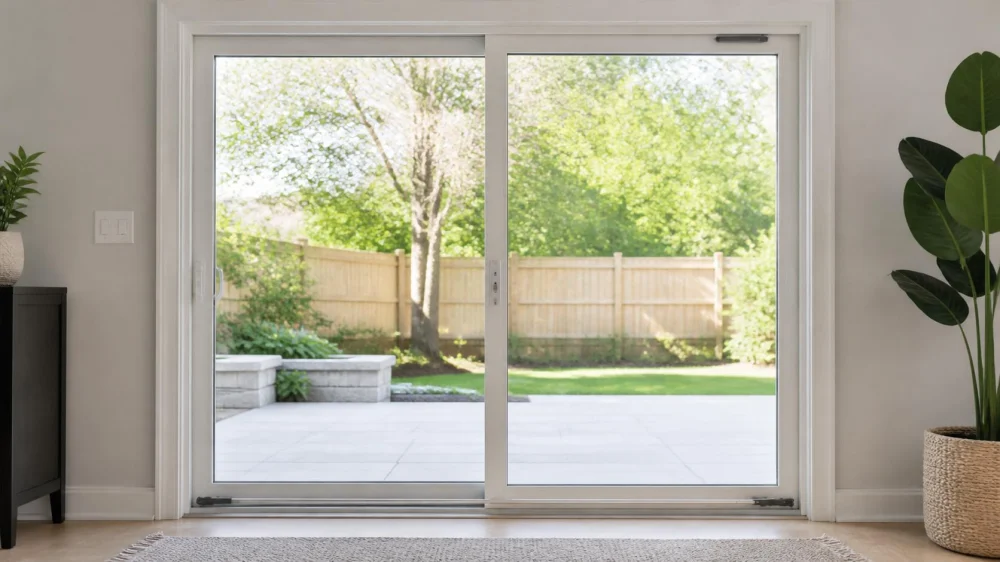
Sliding Patio Door Lock Check: Latch, Track, Lift Resistance, and Exit
On this page
Quick answer
Close a sliding patio door gently and verify that the primary latch or lock engages without lifting, slamming, or pulling the panel into position. With the door locked, apply only light normal opening pressure from inside; stop if hardware flexes or glass shifts. Inspect the track, meeting stiles, frame fasteners, fixed panel, and any approved anti-slide or anti-lift device.
Security additions must not trap occupants or violate fire, building, rental, association, or accessibility requirements. Use a qualified locksmith or door specialist for drilling, glass-adjacent work, structural adjustments, or uncertain egress.

Identify the moving panel and lock
Determine which panel slides and which is fixed. Identify the latch operator, keeper or strike, handle set, track, rollers, and any auxiliary bar, pin, foot bolt, track lock, or anti-lift hardware. Photograph the door closed and open.
- Record manufacturer information if visible.
- Note whether the door is an emergency exit route.
- Check rental or association approval requirements.
- Keep keys and release methods available to authorized occupants.
- Do not test from outside in a way that creates a lockout.
Check closing and latch engagement
Operate the panel using its handle. It should travel smoothly enough to reach the closed position without force. Watch whether the meeting stiles align and the latch enters the keeper fully. A lock that works only when the panel is lifted or pushed sideways can indicate roller, frame, or alignment problems.
- Clear people and objects from the path.
- Slide the door closed normally.
- Engage the lock without forcing the lever.
- Apply gentle opening pressure.
- Unlock and confirm one-motion exit operation where required.
Inspect the track and frame
Look for debris, bent track, loose trim, missing fasteners, corrosion, cracked glazing, frame gaps, and movement in the fixed panel. Clean only loose surface debris using the door maker's method. Do not lubricate, bend, drill, or shim parts before identifying the system.
Check whether the moving panel appears to have excessive vertical clearance, but do not attempt to lift it out. Anti-lift design and adjustment are system-specific.
Evaluate secondary security
Police and justice guidance commonly recommends a properly fitted track device, dowel, pin, or other auxiliary control to supplement the primary sliding-door lock and reduce sliding or lifting. A device should fit the actual inside track, resist easy displacement, avoid stressing glass, and store securely when the door is open.
Do not improvise with a device that can roll away, damage weather seals, create a trip hazard, or be unreachable by an occupant who needs to exit.
Protect emergency egress
A stronger lock is not safer if occupants cannot release it quickly in a fire or other emergency. Confirm which openings are required for egress and how every authorized occupant, including children, older adults, and people with disabilities, can operate the door from inside.
Do not place a keyed device on an exit route unless it complies with applicable requirements and the key-control plan does not create entrapment risk.
Prepare for locksmith or door service
A sliding-door problem may involve the lock, keeper, rollers, frame, glazing unit, or installation. Share photographs, door material, panel direction, lock behavior, alignment symptoms, damage history, and egress role. Ask whether the provider services the entire door system or only the lock.
After work, test closing, locking, unlocking, gentle opening resistance, auxiliary hardware, and emergency release. Record keys, warranties, and replaced parts.
Important limitations
This is general U.S. inspection guidance, not locksmith, glazing, fire-code, accessibility, or forced-entry advice. Door systems and laws vary. No device can guarantee security, and glass remains a separate vulnerability. Use qualified professionals and local authorities for a site-specific plan.
Evidence notes
National Institute of Justice sliding-door standards evaluate resistance to opening, disassembly, panel removal, lock instability, and forced entry. Police home-security guidance also emphasizes auxiliary track or anti-lift protection. The checklist translates those concepts into non-destructive homeowner observations.
FAQ
Why does the lock work only when I lift the door?
Alignment, roller, frame, or hardware wear may be involved; have the whole door assessed.
Is a track bar enough by itself?
It can supplement the primary lock but does not address every opening, lifting, frame, or glazing risk.
Should I drill a pin hole near the glass?
Not without system-specific expertise; drilling can damage glass or the frame and affect egress.
Can I use a keyed auxiliary lock?
Only if it complies with egress rules and all occupants can exit safely.
Who repairs a sliding patio door?
Depending on the issue, a locksmith, door and window specialist, glazier, or contractor may be appropriate.
Next steps
Photograph the door, test normal latch engagement, inspect the track and frame, and identify the exit requirements. Arrange qualified service for force, movement, glass damage, poor alignment, or uncertain auxiliary hardware.




 F & S Locksmith Lockout Service4.0 (343 reviews)
 Minute Key4.0 (14 reviews)
 JC Security4.0 (92 reviews)
 Maximus Lock and Key LLC4.0 (96 reviews)
 KeyMe Locksmiths3.0 (2 reviews)
 KeyMe Locksmiths4.0 (84 reviews)
 How Do I Get Emergency Locksmith Near Me Help in Less Than 30 Minutes?
 How to Secure Your Pool Gate: Locksmith Solutions
 Reliable Locksmith Near Me in Phoenix AZ for Same Day Service Guide
 The Importance of Installing a Keypad Lock in Your Home
 How to Upgrade Your Business Security Without High Costs
 How to Install Window Locks to Prevent Easy Break-Ins