
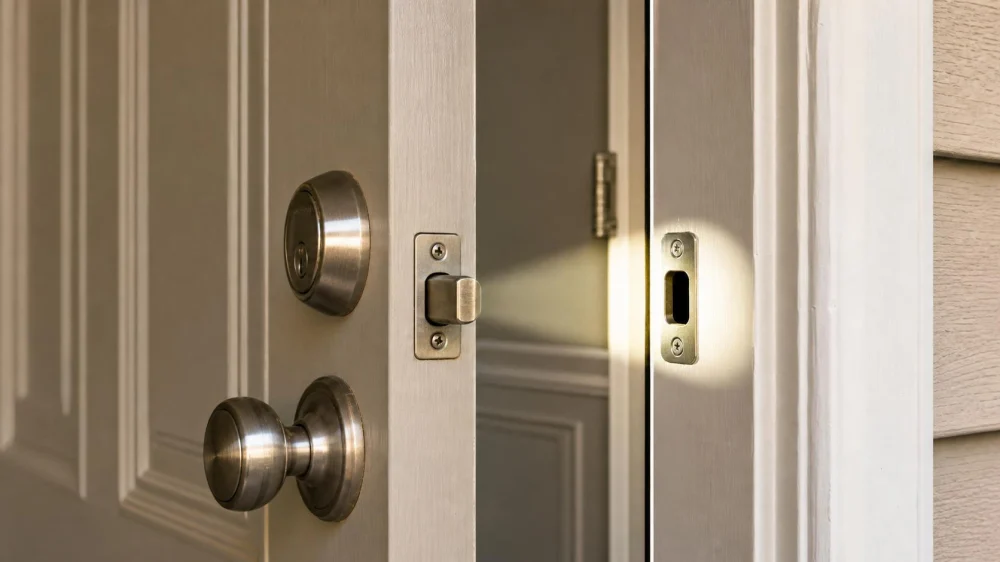
How to Check Door Alignment Before Replacing a Lock
On this page
Quick answer
Test the lock with the door open and then closed. If the latch and deadbolt move smoothly when open but bind against the frame when closed, alignment is a likely factor. Inspect the door gaps, hinge movement, rubbing points, and strike opening before buying a new lock. Stop if the frame is damaged or the exterior door will not secure.
This guide is for US homeowners inspecting their own ordinary hinged door. It does not cover opening a locked door, bypassing security, fire-door modification, or work on a property without authorization.
Alignment problem or lock problem?
A lock can feel defective when the door is actually placing pressure on the latch or bolt. Seasonal swelling, loose hinge screws, a sagging door, settling, worn weatherstripping, or a shifted strike plate can move the openings out of line.
The open-versus-closed comparison is useful because it separates the lock's basic movement from its interaction with the frame. Smooth operation with the door open points toward alignment or pressure. Binding in both positions points more strongly toward the lock, key, cylinder, or internal hardware.
This is a screening method, not a final diagnosis. Multiple problems can exist at the same time, especially on an older exterior door.
Signs the door has shifted
- The top gap is narrow on one side and wider on the other.
- The latch contacts the edge of the strike rather than entering its opening.
- The door rubs the frame, threshold, or floor before it closes.
- The lock works only when the door is lifted, pushed, or pulled.
- Hinge leaves move, screws are visibly loose, or the door drops when partly open.
- Paint is scraped at one spot or polished metal marks appear around the strike.
- New cracks, separated trim, or changing gaps appear around the frame.
A door that suddenly changes after impact, forced entry, construction, or major weather deserves closer assessment. Structural movement and security damage are different from routine hinge wear.
A safe alignment check
- Keep an alternate exit available. Do not work on the only usable exit in a way that could trap someone inside or leave the home unsecured.
- Test the hardware open. With the door fully open, turn the handle, operate the latch, and extend and retract the deadbolt. Do not close the door with the deadbolt extended.
- Close gently. Note where resistance begins. Never slam the door to force the latch into place.
- Observe the gaps. Look along the top, latch side, hinge side, and threshold. Compare the spacing without inserting fingers into pinch points.
- Listen and feel. Identify rubbing, scraping, spring pressure, or a point where pushing the door changes how the lock turns.
- Mark contact safely. Use removable painter's tape on the frame to note a rubbing area. Do not apply material inside the lock or keyway.
- Photograph the evidence. Capture the hinges, gaps, strike, and rub marks for comparison or a locksmith consultation.
Check hinges, gaps, and frame
Open the door partway and watch each hinge while another authorized adult gently supports the door. A hinge leaf should not pull away from the door or jamb. Missing screws, cracked wood, bent knuckles, and shiny movement marks are relevant clues.
Do not substitute extra-long screws without knowing what is behind the jamb. Wiring, glass, side lights, or other construction details may be nearby. Overtightening can strip holes, distort a hinge, or pull the frame out of position.
Inspect weatherstripping for folds, detached sections, or paint buildup that pushes the door away from the stop. Look for water damage, soft wood, separated trim, or a threshold that has risen. A locksmith may need a carpenter or building professional when the frame itself is unstable.
Compare the latch and strike
Close the door slowly while watching the latch approach the strike from the safe side. Wear marks can show whether the latch is hitting high, low, or sideways. The deadbolt should enter its opening without using the key or thumbturn to pull the door into place.
Do not enlarge a strike opening until the cause is known. Moving or filing the strike may hide a sagging hinge, reduce the amount of solid material supporting the hardware, or weaken the intended security of the opening.
On an exterior door, also confirm that the latch's auxiliary plunger, when present, rests against the strike rather than entering the opening. Correct placement helps the deadlatching feature work as designed. A locksmith can verify the setup without explaining or using bypass methods.
Choose the right next step
Minor hinge maintenance
If a visible hinge screw is simply loose and the wood is sound, careful tightening with the correct hand tool may restore alignment. Stop when the screw is snug; do not keep turning if it spins or the hinge pulls unevenly.
Locksmith assessment
Call a locksmith when the lock binds open and closed, the cylinder is loose, the key is damaged, the bolt does not extend fully, the strike or security hardware needs repositioning, or the door cannot be secured. Verify the locksmith and request authorization before drilling or replacing parts.
Carpentry or structural assessment
Soft wood, a split jamb, substantial sag, water damage, widespread wall cracks, or a frame that is no longer square may require carpentry or building evaluation. Replacing the lock alone will not correct the supporting opening.
Door alignment checklist
- The latch and deadbolt move smoothly with the door open.
- The door closes without lifting, slamming, or force.
- Gaps are reasonably consistent and no edge rubs.
- Hinge leaves remain tight and wood is not split.
- Weatherstripping is seated and not folded into the opening.
- The latch and bolt enter their openings without side pressure.
- The frame shows no fresh impact, water, or structural damage.
- The exterior door can be secured after the inspection.
Limitations and safety notes
A visual check cannot verify internal lock wear, hidden frame damage, fire-rating requirements, accessibility rules, or the strength of the entire door assembly. Product instructions and local requirements control hardware installation.
Do not disassemble security hardware on a door you do not own or manage with permission. Seek urgent help after forced entry, when an exterior door cannot lock, or when movement suggests the frame or wall is unstable. Keep children and pets away from an open work area.
Frequently asked questions
Why does the deadbolt work only when I push the door?
Pressure may be moving the bolt into line with the strike. Check weatherstripping, door position, and strike alignment rather than using the bolt to pull the door closed.
Can I spray lubricant into a binding lock?
Not until the source is identified. Use only a product and method approved by the lock manufacturer; the wrong lubricant can collect debris or damage finishes.
Should I file the strike plate opening?
Not as a first step. Confirm hinge and frame condition because removing material may reduce security or hide a continuing alignment problem.
Why does the door change with the seasons?
Wood and weatherstripping can respond to humidity and temperature. Repeated or severe binding still deserves evaluation for drainage, finish, frame, and hardware issues.
Does a misaligned door mean I need a new lock?
No. If the hardware operates smoothly when the door is open, correcting the door or frame interaction may solve the problem without lock replacement.
Sources and evidence notes
The guidance follows common door and locksmith diagnostic practice: compare open and closed operation, inspect visible gaps and contact marks, avoid forcing hardware, and repair the supporting door assembly before replacing functional lock parts.
No universal gap size, screw length, strike adjustment, or hardware recommendation is assumed. Door construction, product instructions, fire rating, and on-site conditions determine the repair.
Next steps
Photograph the door gaps and test the latch and deadbolt once with the door open and once closed. Write down exactly what pressure changes the result. If a simple loose hinge screw is not the clear cause, send those observations to a verified locksmith or door professional before authorizing replacement hardware.

 KeyMe Locksmiths4.0 (105 reviews)
 Locks Around the Clock4.0 (116 reviews)
 Minute Key0.0 (0 reviews)
 Hoernel Key Shop Inc4.0 (123 reviews)
 KeyMe Locksmiths2.0 (3 reviews)
 KeyMe Locksmiths4.0 (48 reviews)
 Cost Guide for Replacing Car Ignition Near You
 What to Do If Your House Key Is Stolen and You Feel Unsafe
 The Benefits of Installing a Smart Lock with Mobile Access
 Locksmith Near Me in El Paso TX Affordable Lock Repair Guide
 Locksmith Advice: How to Maintain Your Locks Year-Round for Optimal Security
 How Do I Contact a 24 Hour Locksmith Near Me Quickly in Emergencies