
How to Verify a Locksmith Before Any Work Begins
On this page
- Quick answer
- Verify the business during the call
- Check local license and registration rules
- Verify the technician on arrival
- Prepare proof of authority
- Approve a written scope and price
- Keep a complete service record
- Verification checklist
- Limitations and danger signs
- Frequently asked questions
- Official consumer guidance
- Save one verified contact now
Quick answer
Before a locksmith begins, verify the business name, street or service address, phone number, technician's name, applicable license or registration, insurance where relevant, and the vehicle or identification expected. Prepare proof that you are authorized to access the home, vehicle, business, or locked item. Get a written estimate showing the service call, labor, parts, after-hours fees, tax, and conditions that could change the price.
If the identity, authority, scope, or price cannot be resolved, pause the work and contact another provider or the appropriate property, roadside, or emergency resource.
Verify the business during the call
Do not assume the first sponsored search result is a nearby locksmith. Ask for the legal business name, physical or service address, callback number, and whether the person answering is the locksmith company or a dispatch marketplace. Search the official licensing database when your jurisdiction regulates locksmiths.
Ask who will arrive and in what vehicle, the estimated arrival window, service-call fee, likely price range, accepted payment methods, and cancellation fee. Call back using a number you independently verify if the listing, dispatcher, and technician names do not align.

Check local license and registration rules
Licensing varies across states and cities. Some regulate the company, individual technician, or both; others use different business or contractor requirements. Use the official state or local licensing website rather than a badge on an advertisement.
Confirm status, expiration, business name, and the individual when the database supports it. A license from another trade or jurisdiction may not authorize the specific service. Ask about required insurance for work that could damage property.
Verify the technician on arrival
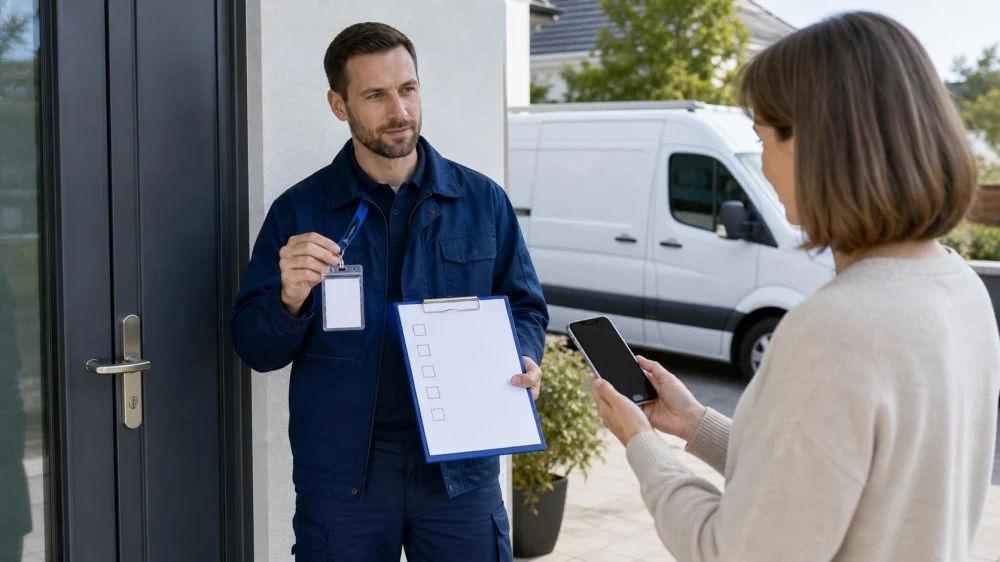
Before opening the door or handing over keys, compare the technician's name, company, identification, license or registration, vehicle, and callback details with what was provided. A plain vehicle is not proof of fraud, but unexplained identity changes deserve verification.
Keep another trusted person present for an emergency lockout when practical. Do not hand a stranger a phone containing passwords, identity documents, or remote-access controls. Share only the information needed to establish authority and complete the approved job.
Prepare proof of authority
A legitimate locksmith should expect to verify your right to access the property. Depending on the situation, that may involve photo identification with the address, vehicle registration, lease, property record, business authorization, or confirmation from an owner, manager, fleet operator, or roadside provider.
If your identification is locked inside, tell the company before arrival and ask what alternative process it accepts. Do not ask a locksmith to bypass an occupied property, safe, vehicle, mailbox, restricted key system, or access-control system without clear authority.
Approve a written scope and price
Ask the technician to inspect first and update the estimate before touching the lock. The document should distinguish opening, decoding, key cutting, rekeying, repair, replacement, drilling, door or hardware repair, parts, and service fees. Record the maximum authorized amount or obtain approval for each change.
Be cautious if a very low phone quote becomes a much higher demand without a specific diagnosis, or if the technician insists on cash, pressures immediate work, or will not itemize charges. Do not sign blank or incomplete forms.
Keep a complete service record
Save dispatch messages, estimate, authorization, before-and-after photos, parts information, key count, codes changed, warranty, invoice, and payment receipt. The final invoice should identify the business, technician or license where required, service location, lock serviced, work performed, parts, charges, and total paid.
For a rekey or replacement, confirm which old keys no longer work, how many new keys were supplied, and who received them. Do not photograph or email bitting, key codes, or access credentials without a secure business need.
Verification checklist
- Confirm legal business and independent callback information.
- Check applicable official license records.
- Record technician name and expected vehicle.
- Prepare proof of authorization.
- Get itemized pricing before work.
- Approve changes in writing.
- Count keys and test the completed lock.
- Keep the invoice, warranty, and receipt.
Limitations and danger signs
- This guide is not legal, licensing, insurance, or security-system advice.
- Locksmith requirements and acceptable proof vary by jurisdiction and situation.
- Do not confront a threatening person; move to safety and contact law enforcement.
- Do not authorize work on a fire exit, life-safety door, or access-control system without qualified review.
- For a child, vulnerable person, pet, fire, or medical danger behind a lock, call emergency services.
Frequently asked questions
Is a top search result automatically trustworthy?
No. Sponsored placement does not verify location, licensing, identity, or quality.
Why does the locksmith need my identification?
It helps establish that you are authorized to access the locked property.
Can the final price differ from the phone estimate?
Conditions can differ, but the technician should explain and obtain approval for a revised scope and price before proceeding.
Should I pay only in cash?
No legitimate universal rule requires cash. Use an agreed, traceable method and obtain a receipt.
What if my state has no locksmith license?
Verify business registration, identity, insurance, written pricing, reputation, and any local or contractor rules that do apply.
Official consumer guidance
State consumer agencies in Connecticut and Maryland advise consumers to verify the individual or license where required, request full pricing, expect proof of authorization, and obtain an itemized invoice. FTC guidance warns that paid search results and phone numbers can be used for impersonation.
Save one verified contact now
Before an emergency, find one locksmith through official licensing information or a trusted property or roadside provider. Save the independently verified business name and number—not just a search-result screenshot.
 KeyMe Locksmiths4.0 (58 reviews)
 KeyMe Locksmiths4.0 (20 reviews)
 KeyMe Locksmiths1.0 (1 reviews)
 Minute Key4.0 (11 reviews)
 KeyMe Locksmiths4.0 (28 reviews)
 KeyMe Locksmiths4.0 (9 reviews)
 How to Protect Your Home From Lock Prying and Tampering
 How to Protect Your Home From Intruders Using Smart Home Features
 What to Do If Your Key Won’t Come Out of the Lock | Locksmith Finder
 How to Protect Your Business from Break-Ins: Locksmith Solutions
 Locksmith Near Me in Colorado Springs CO for Reliable Lock Repairs: Trusted Local Guide
 How to Protect Your Business With Restricted Access Lock Systems - Expert Tips