
Locksmith Estimate: Compare Labor, Hardware, and Fees
On this page
- Describe the job consistently
- Verify the business and technician
- Separate service call and labor
- Identify hardware and keying
- Ask about access and damage risk
- Check after-hours and travel fees
- Review authorization and ownership
- Understand allowances and changes
- Confirm testing, warranty, and records
- Compare value and warning signs
- Estimate checklist
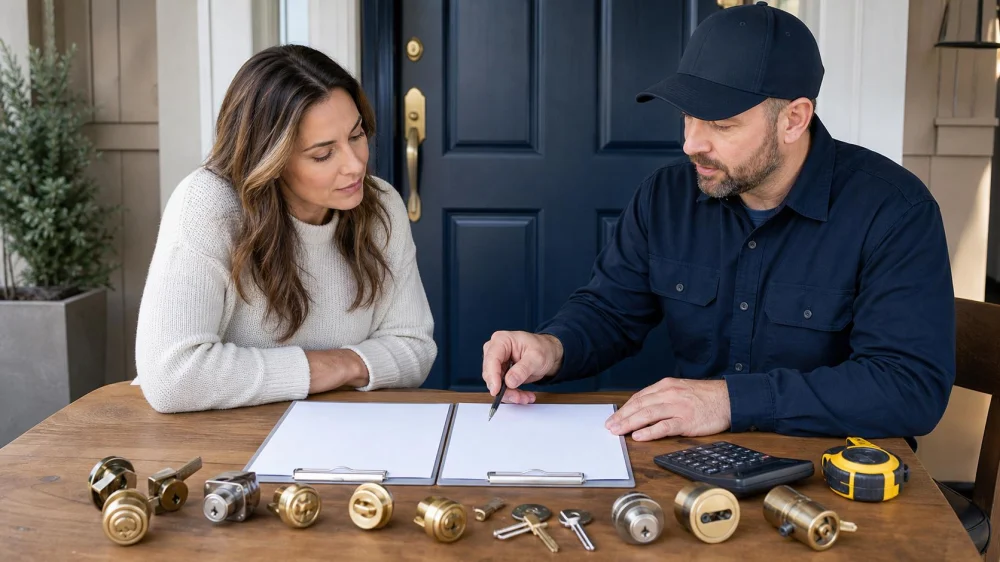
A locksmith estimate should identify the door, lock, access problem, proposed method, labor, hardware, keying, service call, and possible added charges. A low phone quote may cover only arrival, while a higher written estimate may include parts and testing. Compare equivalent scope before comparing totals.
Security work requires authorization. Be ready to prove ownership, tenancy, management authority, vehicle control, or permission from the responsible party. In an immediate threat, fire, medical emergency, or vulnerable-person lock-in, contact emergency services first rather than waiting for ordinary price comparisons.
Write the estimate request before calling so stress does not change the description from one provider to another. Include whether the lock must be operational today or whether a planned appointment is acceptable. A planned job often allows time to confirm hardware, finish, keying, and property permission.
Keep quotes with the date and the name of the person who provided them. Note whether the amount came from a dispatcher, technician, online form, or in-person inspection. Ask how long it remains valid and whether photos are sufficient for a firm price.

KeyMe Locksmiths
Country Club HillsCook CountyIllinois
4005 167th St, Country Club Hills, IL 60478, USA
Describe the job consistently
Give each provider the same address area, property type, door or vehicle, lock style, symptoms, urgency, time, and access conditions. Explain whether the key is lost, broken, stolen, locked inside, turning without opening, or simply being replaced.
Send clear photos through a verified secure route without showing full key cuts, access codes, alarm panels, or private documents. State whether the door is open or closed and whether another lawful entry exists. Do not claim a lockout when the project is a planned upgrade.
Verify the business and technician
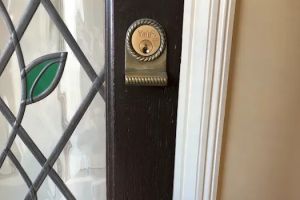
Check licensing or registration with the relevant authority where required. Verify the legal business name, physical or service address, published phone, insurance, and complaint route. Search official sources rather than relying only on an advertisement or map pin.
Ask how the arriving technician and vehicle will be identified. Before granting access, match the business information and request credentials. A dispatch marketplace may send a different company than the name in the ad; ask which party bills and warrants the work.
Separate service call and labor
Ask whether the service call covers travel and assessment only, whether it is credited toward work, and what labor rate or flat task follows. Confirm minimum labor, diagnostic charge, return-trip fee, cancellation fee, and tax.
A range can be reasonable when the cylinder, internal damage, or door condition is unknown. The provider should explain what moves the price from the low to high end. Request the on-site total before work begins.
Identify hardware and keying
For replacement, record the manufacturer, model or grade, finish, keyway, cylinder, smart features, included keys, and compatibility with the door. Ask whether parts are new, original, approved aftermarket, refurbished, or customer-supplied.
Clarify whether the job is repair, rekey, cylinder replacement, complete lock replacement, key origination, duplicate cutting, or electronic programming. These are different scopes. Confirm whether other locks must remain keyed alike or join a master-key system.
Ask about access and damage risk
Ask which non-destructive methods are appropriate and when drilling or part destruction could become necessary. No provider can promise every locked or failed mechanism will open without damage, but the sequence and authorization should be clear.
Confirm who repairs door, frame, trim, glass, paint, vehicle components, or electronic systems if access work affects them. Photograph existing condition. Do not authorize destructive entry until ownership is verified, scope explained, and safer options considered.
Check after-hours and travel fees
Evening, weekend, holiday, remote-area, parking, toll, emergency, and difficult-access fees can materially change the total. Ask for the current clock-based rate and whether the fee changes if the technician arrives after a cutoff.
Obtain an arrival window and cancellation rules. If you regain access before arrival, call immediately. Confirm whether a dispatched technician still charges travel and how payment will be documented.
Review authorization and ownership
Ask what identification and property documents the provider requires. Tenants, property managers, agents, fleet drivers, employees, and family members may need written permission. A locksmith should not accept urgency as a substitute for lawful authority.
If identification is locked inside, explain this before dispatch and ask about the verification procedure. Do not ask the technician to bypass a landlord, court order, employer, or co-owner dispute. Obtain appropriate legal help when access rights are contested.
Understand allowances and changes
An estimate may assume a standard cylinder, ordinary door thickness, compatible prep, or reusable latch. Ask which conditions are allowances. A warped door, damaged frame, uncommon part, restricted keyway, failed electronics, or prior modification can change scope.
Require a written or clearly documented change with the new part, labor, price, and reason before additional non-emergency work. Declining an added option should not erase the original estimate. Keep removed parts when lawful and requested before disposal.
Confirm testing, warranty, and records
The estimate should include final testing from inside and outside, key count, electronic credentials, door alignment, latch operation, emergency egress, and cleanup. Test every supplied key before the technician leaves and never accept a lock that impairs safe exit.
Separate parts warranty from labor warranty. Record exclusions, claim process, and maintenance requirements. Obtain an itemized paid invoice without putting access codes or full key patterns in an insecure document.
Compare value and warning signs
Compare credentials, response time, method, hardware, damage risk, total price, testing, records, and warranty. A qualified planned appointment may offer better value than an artificially cheap emergency listing with unclear dispatch and hardware.
Be cautious with refusal to identify the company, no ownership check, pressure for cash only, drastic on-site price escalation without explanation, immediate drilling without assessment, blank invoices, or requests for unrelated passwords. Stop before work if the provider does not match the verified booking.
Estimate checklist
Record the business, credentials, technician, service call, labor, task, hardware, keying, keys, programming, after-hours fee, travel, tax, access method, damage responsibility, authorization, price-change rules, testing, warranty, and payment method.
The strongest locksmith estimate makes the security result and total cost understandable before tools touch the lock. A written comparison protects against mismatched quotes, while final testing and an itemized record confirm that the door or vehicle is both accessible to authorized users and secure afterward.
 KeyMe Locksmiths4.0 (397 reviews)
 Minute Key1.0 (1 reviews)
 J and B Locksmith LLC4.0 (152 reviews)
 KeyMe Locksmiths4.0 (20 reviews)
 E.R. Locksmith Services5.0 (372 reviews)
 KeyMe Locksmiths4.0 (23 reviews)
 How to Protect Your Office During Off-Hours with Locks and Alarms
 How to Protect Your Home From Burglars Using Technology and Locks
 How to Secure Your Storm Door: Locksmith Solutions
 How to Secure Your Front and Back Doors With Deadbolts: A Comprehensive Guide
 How to Secure Your Garden Shed: Locksmith Solutions
 Locksmith Advice for Handling Lockouts Without Causing Damage