
Multipoint Door Lock: Lift, Lock, Remove, and Test
On this page
Quick answer
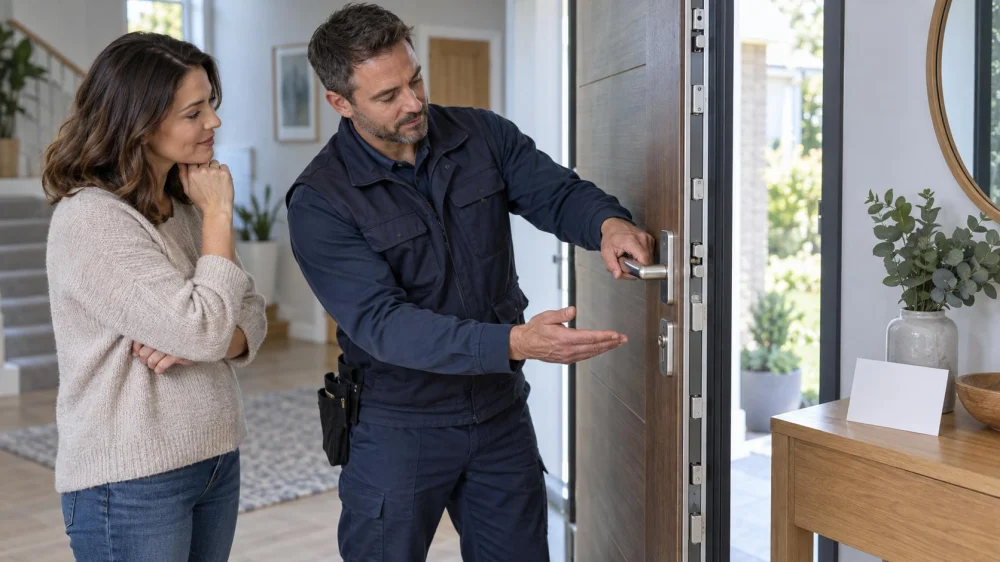
For many multipoint doors, close the door fully, lift the handle to engage hooks or bolts, turn the key or thumbturn to lock, and remove the key when leaving. Confirm the exact sequence for your hardware. If the handle, key, or door needs force, stop; test alignment and call a qualified locksmith or door specialist instead of forcing or dismantling the mechanism.
Identify the locking sequence
A multipoint system moves more than one latch, hook, roller, or bolt along the door edge. The handle may engage those points before the cylinder actually locks them. Hardware differs, so use the door or lock manufacturer's instructions whenever available.
Show every authorized user the full sequence. Pulling the door shut without lifting and locking can leave a system resting only on its spring latch.

Test with the door open
With the door supported and no one outside, gently operate the handle and observe which locking points move. Turn the key only as the instructions allow. Keep fingers clear of hooks, bolts, and the door edge.
Return every component to the unlocked position before closing. Never slam the door with hooks or bolts extended, because they can strike the frame and damage the mechanism.
Test the full closing cycle
Close the door normally, lift the handle, lock it, and confirm the handle no longer retracts the points as it would when unlocked. Check from the inside and outside while another safe entrance remains available.
Police.uk door and window lock advice summarizes the common multipoint sequence as lifting the handle, locking, and removing the key. Product instructions and local fire-safety requirements still control your specific door.
Recognize alignment or hardware trouble
Stop when the handle will not lift smoothly, the key binds only with the door closed, the door rubs or drops, a hook misses its keep, or weather changes the fit. Note whether gentle inward, outward, upward, or downward pressure changes the symptom, but do not use that pressure as a permanent workaround.
A locksmith or door specialist can distinguish cylinder trouble from worn gearbox parts, loose hinges, frame movement, damaged keeps, or installation error. Photograph the door edge and hardware markings without posting key details publicly.
Create a clear user handoff
Demonstrate the sequence to household members, guests, tenants, cleaners, or carers who are authorized to use the door. Explain when a key must be removed, where an emergency key is kept, and how the exit operates from inside.
After repair or adjustment, test every authorized key and the inside release. Record who received keys and return outdated copies according to the access plan.
Important safety limits
Do not defeat fire-exit hardware, block a required escape route, leave keys where outsiders can reach them, or dismantle springs and gearboxes without training. Security must not prevent lawful emergency egress. Call emergency services when a person is trapped or immediate danger exists.
Frequently asked questions
Is pulling the door shut enough?
Often no. Many multipoint systems require the handle and key or thumbturn sequence to engage and secure all locking points.
Why does the key turn when the door is open but not closed?
That pattern often suggests alignment or closing pressure, but a professional should inspect the door, frame, keeps, and mechanism.
Should I force the handle upward?
No. Force can worsen damage or leave the door unable to open. Stop and arrange inspection.
Can I spray any lubricant into the lock?
No. Use only a product approved for the exact lock and component, or ask the manufacturer or locksmith.
Sources and evidence notes
This guide uses public police crime-prevention advice about fully engaging multipoint locks. It adds safe testing and handoff steps while deferring to the product manual, local code, and qualified professionals.
Next steps
Confirm the manufacturer's sequence, test gently with the door open and closed, and teach authorized users. If anything binds or needs force, document the pattern and arrange professional adjustment before the mechanism fails.

 Minute Key3.0 (11 reviews)
 Chapanar's QuiKeys4.0 (167 reviews)
 Minute Key0.0 (0 reviews)
 KeyMe Locksmiths4.0 (15 reviews)
 Snap & Crack Locksmith4.0 (1365 reviews)
 Minute Key4.0 (27 reviews)
 Window Lock Check: Close, Test, Keys, and Emergency Exit
 Multipoint Door Lock: Lift, Lock, Remove, and Test
 Locksmith Intake Call: Define Scope Before the Appointment
 Locksmith Completion Review: Test the Result Before Sign-Off
 Lock Rekey Appointment: Prepare Access and Key Handoff
 Spare House Key Plan: Choose Holders, Storage, and Review