
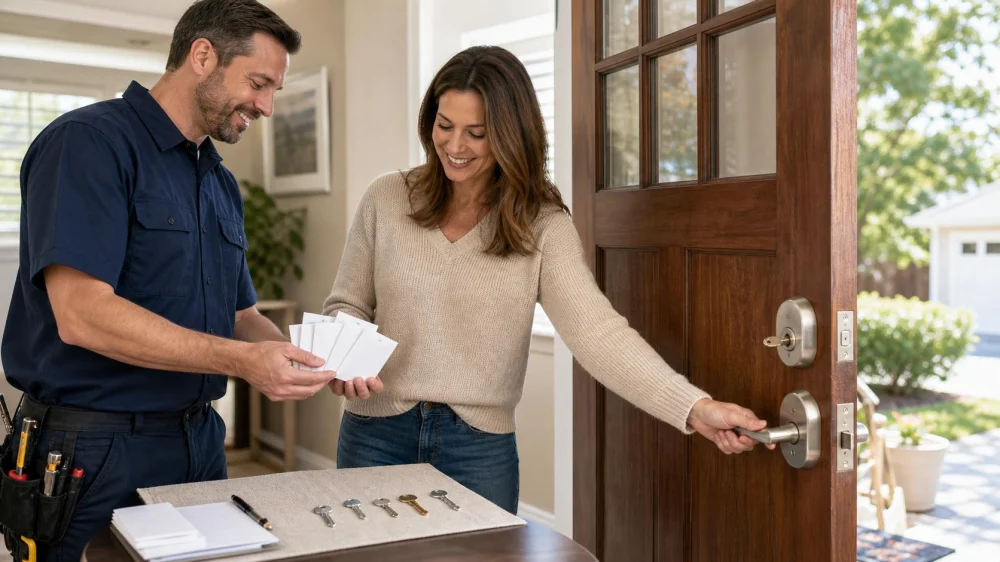
New Lock Key Handoff: Count, Test, and Record Every Copy
On this page
Quick answer
Before a locksmith leaves, match every changed lock to the work order, count all new keys, and test each key with the door open and then closed. Confirm which locks are keyed alike, which remain unique, whether old keys still operate anything, and whether the technician retained or destroyed any temporary or test keys under the agreed policy.
Use neutral key IDs rather than writing the property address. Record who receives each copy, store unissued spares securely, and document smart-lock codes, cards, fobs, battery keys, and emergency access separately. Correct sticking, wrong-key, missing-copy, or door-alignment problems before signing final acceptance.

List every door and lock
Walk the property with the work order. Assign each opening a short ID such as Front-A, Patio-B, Garage-C, Office-1, or Storage-2. Photograph the door and hardware without showing the street number, key cuts, or active codes.
Record the hardware changed: knob or lever cylinder, deadbolt, mortise lock, rim lock, padlock, mailbox lock, gate cylinder, panic hardware, smart lock, key switch, cabinet lock, or another device. Note locks intentionally excluded.
For multifamily, commercial, rental, or shared property, confirm ownership and authority before accepting keys. Common-area, fire-egress, postal, utility, and life-safety hardware may have special control requirements.
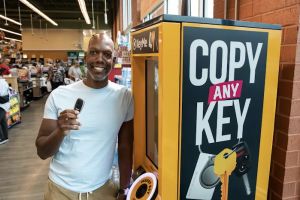
Count keys before the technician leaves
Count physical keys by key ID and type. Separate operating keys, control keys, master keys, change keys, emergency keys, programming keys, and uncut blanks. Do not group visually similar keys without testing.
Write the quantity promised, quantity delivered, and person receiving them. Put each group in a sealed or closed envelope labeled with the neutral door ID. Never photograph the blade closely enough to reproduce the cut.
If duplicates will be delivered later, record the exact count, due date, duplication restriction, cost, and delivery method. A verbal “we will bring more” is not a complete closeout.
Test each key from both sides
With the door open, insert each key fully and operate the lock through its normal range without forcing it. Confirm smooth insertion, rotation, bolt extension, bolt retraction, and key removal in the intended position.
Then close the door and test normal locking and unlocking from the secured and egress sides. Door sag, weatherstripping, strike alignment, threshold pressure, and closer force can create a problem that an open-door test misses.
Test emergency egress without a key where code and hardware require it. Never accept a lock that traps occupants, requires prohibited steps to exit, or interferes with a fire-rated assembly. Ask a qualified professional and local authority about applicable requirements.
Label keys without exposing the address
Use a neutral code linked to a private register. A lost key marked “back door, 125 Oak Street” gives away both location and use. Avoid names, alarm details, business hours, unit numbers, and travel dates.
Keep the private register protected and limit access. It can include key ID, lock ID, issue date, recipient, return date, duplication permission, and lost-key response.
Color caps can help daily use but should not be the only identifier because colors fade and users may have color-vision differences. Combine a tactile or coded mark with the secure register.
Control spares, codes, and restricted keys
Store spare keys in a locked location separate from the address information. Do not hide them under mats, planters, rocks, or obvious exterior features. If using a lockbox, control its code, placement, authorization, and audit trail.
For restricted or patented key systems, collect the authorization card, keyway information, supplier contact, duplication process, and agreement about ownership. Do not publish those details.
For electronic locks, document administrator transfer, user-code removal, battery backup, physical override keys, cards, fobs, app ownership, recovery methods, notifications, and offline operation. Delete installer or temporary codes when the manufacturer and work order require it.
Close out old keys and open items
Test an old key only with authorization and the door open. Confirm whether rekeyed locks reject it and whether it still operates an unchanged shed, padlock, mailbox, interior door, or secondary property.
Collect old keys from household members, employees, contractors, cleaners, former occupants, and lockboxes under the access policy. Mark returned, missing, or unknown copies. A rekey controls the cylinder changed; it does not magically retrieve or disable keys for unchanged locks.
List open issues on the invoice or punch list: stiff cylinder, loose trim, misaligned strike, damaged door, missing key, wrong function, code not transferred, finish damage, or follow-up hardware. Sign completion only after the scope is clear.
Frequently asked questions
Should every new key be tested?
Yes. Duplicates can differ slightly, and one key may work poorly even when another operates the same lock.
Can I label a key with a room name?
A neutral ID is safer. Keep the mapping in a protected register.
What does keyed alike mean?
It means the same authorized key operates multiple specified locks. Confirm exactly which locks are in that group.
Should the locksmith keep a key?
Follow the written agreement and applicable law. Ask directly about test, temporary, master, and digital credentials and document the answer.
What if a new key works only when lifted or jiggled?
Do not accept that as normal. Stop forcing it and ask the locksmith to check the key, cylinder, door, and strike alignment.
Limits and professional help
This handoff checklist does not determine ownership, tenant rights, locksmith licensing, fire code, accessibility, master-key design, or insurance requirements. Rules differ by state, city, property type, and hardware.
Use a verified locksmith with authority to work on the property. Obtain qualified help for panic hardware, fire-rated doors, interconnected locks, access-control systems, safes, vehicle keys, and master-key networks.
Next steps
Print a door-and-key table before the appointment. Walk every opening, count delivered keys, test each one open and closed, transfer digital administration, and seal spares by neutral ID. Record old-key status and unresolved work before approving the invoice.
 Vandalia Locksmith4.0 (68 reviews)
 KeyMe Locksmiths5.0 (2 reviews)
 Minute Key5.0 (1 reviews)
 Minute Key2.0 (2 reviews)
 Locks and Unlocks Sun Prairie4.0 (279 reviews)
 KeyMe Locksmiths5.0 (1 reviews)
 How to Upgrade Your Home Security Without Replacing All Locks
 What to Do If Your Door Won’t Lock Properly at Night | Locksmith Finder
 How to Protect Your Home From Burglary During Holidays
 When Emergency Locksmith Near Me Service Is Really Necessary
 How to Protect Your Business With Restricted Access Lock Systems - Expert Tips
 Locksmith Near Me Open Now in Anaheim CA for Fast Service