
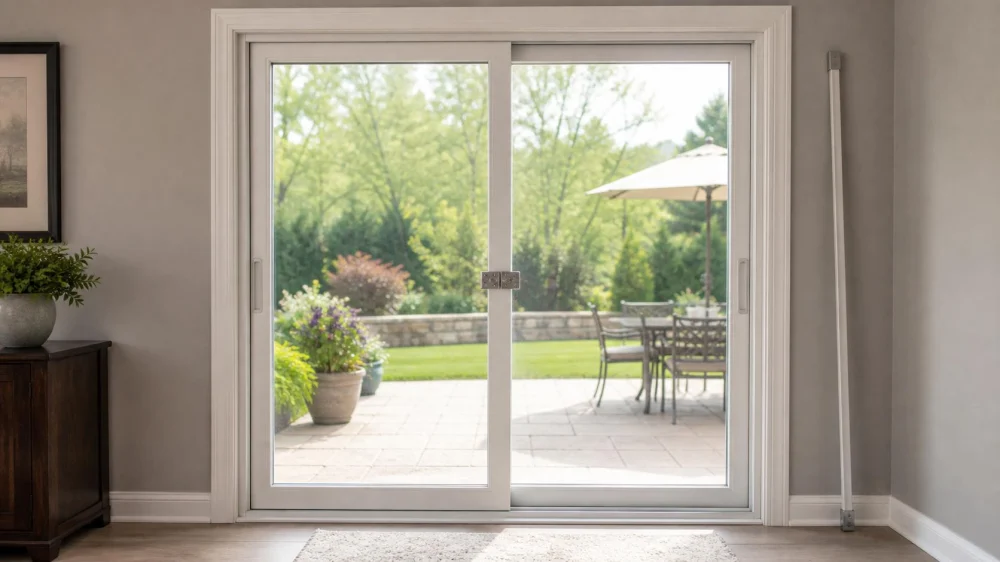
Patio Door Lock Check: Test Latch, Alignment, and Backup
On this page
Quick answer
Test a patio door only when you are authorized and can reopen it safely. Clear the track, close the panel without slamming, operate the latch, and gently verify that the door remains closed. Look for rubbing, bounce-back, loose hardware, frame movement, damaged glass, or a latch that engages only when the panel is lifted or forced. Keep emergency egress usable and ask a qualified locksmith or door professional to diagnose uncertain alignment or structural problems.

Why the complete door cycle matters
A sliding or hinged patio door is a system of panel, rollers or hinges, track, frame, handle, latch, keeper, weather seals, glass, and surrounding structure. A lock can appear functional while the panel is open but miss the keeper after closing. Dirt, settlement, loose fasteners, worn rollers, weather, impact, and frame movement can change how the parts meet.
This guide supports authorized visual checks of residential patio doors in the United States. It does not provide bypass methods, certify security, approve an egress condition, or replace manufacturer instructions, fire and building codes, property management, a locksmith, glass professional, or door installer. Door types and local requirements vary.

What to inspect before adjusting anything
- Ownership or tenant authorization, property-manager rules, alarm or smart-home connection, shared access, warranties, and required notices.
- Door type, manufacturer and model if known, panel configuration, primary latch, keyed cylinder, auxiliary device, sensors, and available keys.
- Track or threshold debris, drainage, panel movement, rollers or hinges, weather seals, handle tightness, frame condition, and visible fasteners.
- Latch hook or bolt and keeper alignment, scrape marks, partial engagement, bounce-back, lifting or pushing needed, and operation from both authorized sides.
- Glass cracks, loose panels, frame separation, water intrusion, rot, corrosion, settlement, impact evidence, and nearby floor or wall movement.
- Emergency egress, child safety, accessibility, pet access, night use, power or battery backup, and how an auxiliary device is released quickly.
- Recent service, parts and key inventory, photos, test conditions, locksmith scope, permit needs, warranty, and final handoff.
Test the patio door step by step
- Confirm authority, disarm or notify monitored systems as permitted, keep another safe exit available, and avoid testing while someone is outside unexpectedly.
- Inspect the glass, frame, track, threshold, handle, latch, keeper, and auxiliary devices without loosening or forcing parts.
- Open and close the panel slowly through its full travel, noticing drag, wobble, scraping, sudden drop, bounce, or a changing gap.
- With the panel fully seated, operate the latch normally and note whether it engages without lifting, pushing, slamming, or excessive handle force.
- Gently test the closed panel using ordinary hand pressure only, then unlock and verify that authorized opening and emergency release remain clear.
- Repeat under relevant conditions, such as after cleaning the track or at a different temperature, only when safe and without masking a defect.
- Document symptoms and arrange the correct locksmith, door, glass, structural, or property professional; test all functions again after work.
Save the door location and type, authorization, key and access inventory, photos of latch and keeper, glass and frame condition, track and movement observations, exact closing and locking symptoms, weather or time, auxiliary devices, alarm integration, professional diagnosis, parts, warranty, final egress and lock test, and who received keys or codes.
Glass, egress, authority, and repair limits
Do not force a handle, pry a panel, drill hardware, bend a latch, loosen unknown structural fasteners, work around cracked glass, or add a device that traps occupants or blocks required egress. A rod, pin, bar, sensor, or smart device may add a layer but does not correct poor alignment or a failed primary lock. Security films, glass, frame anchorage, and child-safety products require system-specific assessment.
Keep people away from cracked, loose, or shifting glass and call a glass or door professional. Use a locksmith or installer for a latch that will not engage, a seized key, uncertain parts, or panel adjustment; use a building professional for frame movement, rot, or settlement. Call emergency services for active forced entry, fire, a trapped occupant, severe injury, or another immediate danger, and use the safest available exit.
Frequently asked questions
Why does the lock work when the door is open?
The latch can move freely yet miss or only partly enter the keeper when the closed panel, rollers, track, frame, or weather seals are misaligned.
Should I lift the door to make it lock?
Needing to lift, push, or force the panel is a symptom to document, not a dependable fix. Have the door system assessed.
Is a track bar enough security?
It may be one authorized layer when correctly fitted and safely releasable, but it does not repair the main lock, frame, glass, or egress problems.
Can I lubricate a sticky patio lock?
Use only the product and location specified by the lock and door manufacturers; the wrong lubricant can attract debris or damage materials.
Who should repair the problem?
A locksmith handles many lock and key issues, while rollers, frames, glass, structure, alarms, or access systems may require other qualified trades.
Sources and evidence
Use the patio door, lock, hardware, alarm, and auxiliary-device manufacturers for operation, parts, lubrication, and installation. Use local building and fire authorities for egress and safety requirements, property management for authorization, and qualified locksmith, door, glass, or structural professionals for diagnosis. Insurer or law-enforcement documentation may apply after damage or attempted entry.
Conclusion and next steps
Test the complete authorized closing and locking cycle without force, record exactly where movement or engagement changes, and keep egress clear. Choose the professional whose trade matches the defect, then verify the primary lock, authorized backup, alarm, and safe opening after work. A patio door is secure only as a working system, not because one handle appears to click.


 KeyMe Locksmiths4.0 (24 reviews)
 KeyMe Locksmiths4.0 (83 reviews)
 KeyMe Locksmiths4.0 (30 reviews)
 Minute Key3.0 (10 reviews)
 Minute Key4.0 (7 reviews)
 Minute Key0.0 (0 reviews)
 The Benefits of Installing a Smart Lock with Mobile Access
 How to Protect Your Home From Burglars With Layered Security
 Locksmith Tips for Preventing Unauthorized Access to Your Business
 Deadbolt Works Open but Binds When the Door Is Closed
 Key Copy Not Working? Safe Checks Before Cutting Another
 How to Choose Between Smart Locks and Traditional Locks