
Deadbolt Works Open but Binds When the Door Is Closed
On this page
Quick answer
If a deadbolt turns smoothly while the door is open but binds when closed, the cylinder may be functional while the bolt and strike opening are misaligned. Do not force the key. Record whether lifting, pushing, or pulling the door changes resistance, then have the hinges, frame, weatherstripping, strike, and door movement checked before metal is removed.
Compare open and closed operation
With the door open and supported normally, extend and retract the deadbolt using the thumb turn and authorized key. It should travel fully without grinding or unusual force. Watch whether the bolt droops, scrapes its own faceplate, or stops short. If it binds while open, the problem may be inside the lock rather than at the frame.
Close the door gently and try again without leaning on it. Then note whether light pressure inward, outward, upward, or downward changes the feel. Do not repeat a test that bends the key or traps someone. Record a short video from the secure side if it does not expose codes, keys, or other private security details.
BILL'S lOCK SHOP, INC.
KalamazooKalamazoo CountyMichigan
604 S Westnedge Ave, Kalamazoo, MI 49007, USA
Observe where alignment changes
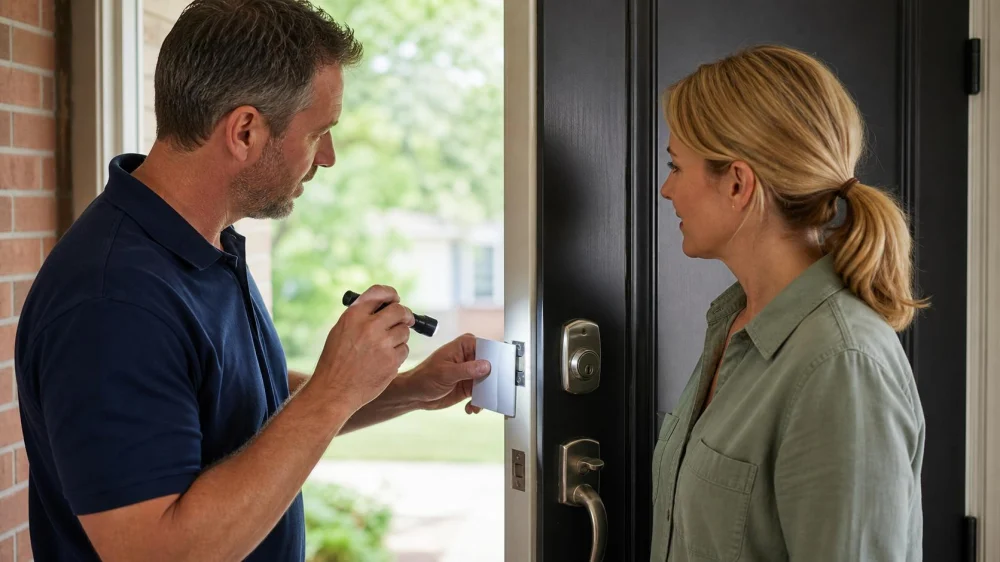
Use a flashlight to inspect the strike opening, bolt edge, hinge gaps, and contact marks. Polished metal, rubbed paint, wood dust, or a mark at the top or bottom of the strike can show the direction of interference. A removable, nonstaining marking method used by a professional can confirm contact without guessing.
Check whether the door latch also needs lifting or pushing. Uneven gaps may indicate loose hinges, worn hinge components, a sagging door, frame movement, or swollen material. Confirm that visible hinge screws and strike screws are present, but do not overtighten, substitute an unsuitable length, or drive screws where concealed glass, wiring, or structure may lie.
Check weather and building movement
Wood doors and frames can change with humidity, while metal systems can move with temperature. New weatherstripping, paint buildup, a replaced threshold, floor work, or a settling frame can shift the closed position. Note whether the problem is seasonal, appears only after rain, or began immediately after another project.
A door that changes rapidly, rubs heavily, shows new wall cracks, or no longer sits square may need a carpenter, door specialist, or building professional in addition to a locksmith. Adjusting the strike can hide a larger movement without correcting the cause. Fire-rated or egress doors have additional requirements and should not be altered casually.
Avoid forcing or weakening security
Do not use the key as a lever. A bent or broken key can add an extraction problem to the alignment issue. Avoid slamming the door, filing the bolt, enlarging the strike opening randomly, removing reinforcement screws, or lubricating the strike area as a substitute for alignment.
Do not leave the deadbolt partially extended. Partial engagement may look locked without providing the intended security. If the door cannot be secured, use an authorized alternative entrance or temporary measure recommended by a qualified professional. Maintain required emergency exit from inside and never add a device that traps occupants.
Choose the right professional
A locksmith can evaluate lock operation, bolt throw, cylinder, strike alignment, and suitable hardware. A carpenter or door technician may be needed for hinge, slab, jamb, or frame correction. Structural movement, water intrusion, or a damaged opening can require another building specialist. Describe the open-versus-closed comparison when booking.
Ask the provider to explain the cause and the least invasive correction. Options can include hinge service, door adjustment, weatherstrip correction, strike repositioning, a properly fitted strike, or lock repair. The correct choice should preserve full bolt engagement, frame strength, smooth latch operation, and required door ratings.
Test the completed adjustment
Test several cycles with the door open and closed, using both the interior turn and every authorized key. The door should latch without slamming, remain stable before locking, and let the bolt extend fully with normal hand pressure. Check that the key withdraws in the expected position and that the door opens promptly from inside.
Request an invoice describing the adjustment and any hardware. Save removed parts, key counts, warranty information, and maintenance instructions. Recheck after a weather change or related building repair. If resistance returns, report the original and current contact pattern rather than forcing the mechanism.
Frequently asked questions
Should I move the strike plate myself?
Only when you understand the door construction, reinforcement, ratings, and cause. Random movement can reduce frame strength or still leave incomplete bolt engagement. Professional adjustment is safer when security or egress matters.
Will lubricant fix the alignment?
No. Manufacturer-approved lock lubricant may help an internal mechanism when appropriate, but it cannot move the strike or correct a sagging door. Diagnose where the resistance occurs first.
Why does lifting the handle help?
Lifting can temporarily move a sagging or loaded door enough to align the bolt. That is a diagnostic clue, not a durable repair, and repeated lifting can stress hardware.
Evidence and limitations
This guide reflects common door and locksmith diagnostic practice: compare operation open and closed, observe contact, correct the door before removing metal, preserve full bolt throw, and verify egress. Door construction, fire ratings, accessibility, hardware listings, and local codes vary. A qualified onsite professional should approve alterations.
Conclusion and next steps
Stop forcing the key, compare open and closed travel, note pressure and weather patterns, and photograph contact marks. Ask a locksmith or door professional to correct the underlying alignment with the least invasive method. Finish by verifying smooth full engagement, interior exit, and consistent operation across several cycles.


 KeyMe Locksmiths3.0 (5 reviews)
 KeyMe Locksmiths0.0 (0 reviews)
 KeyMe Locksmiths3.0 (6 reviews)
 KeyMe Locksmiths4.0 (42 reviews)
 KeyMe Locksmiths4.0 (6 reviews)
 Felts Lock & Alarm Co., Inc.4.0 (164 reviews)
 Lost Car Keys No Spare? Locksmith Solutions and Replacement Options
 How to Protect Your Car With Anti-Theft Locking Devices: Best Options for Car Security
 What to Do If Your Door Lock Is Frozen During Winter
 How to Choose the Right Locksmith for Emergency Car Lockouts
 What Are the Best Locks for Sliding Doors According to Experts
 How to Secure Your Garage with Smart Lock Technology