
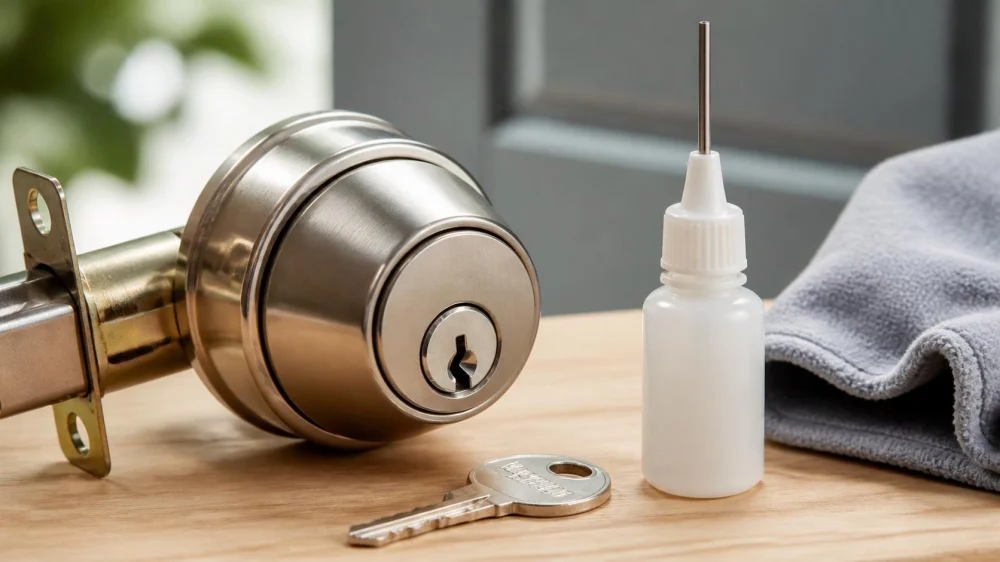
Sticky Lock Cylinder: Clean the Key and Choose the Right Lubricant
On this page
Quick answer
When a key feels sticky, stop forcing it. Compare a clean spare, inspect both keys for bends or wear, test with the door open, and note whether resistance occurs during insertion, turning, or only when the door is closed. Clean dirt from the key and use only the lock manufacturer's recommended lubricant in a minimal amount. Avoid cooking oil, heavy grease, unapproved sprays, and mixing products. Persistent roughness, metal debris, a cracked key, or intermittent failure needs a locksmith.

Why it matters
The symptom may come from a worn key, debris, dry pins, temperature, cylinder damage, latch load, or door misalignment. Force can snap a key or damage internal parts.
This United States maintenance guide is general. Cylinder type, finish, electronic components, weather exposure, warranty, fire-door role, and manufacturer lubrication requirements vary.

Practical checklist
- Compare the primary key with an authorized clean spare.
- Inspect cuts, shoulder, tip, bow, bends, cracks, rust, and debris.
- Test insertion and turning with the door open and then closed.
- Check whether lifting or pulling the door changes resistance.
- Identify lock brand, model, cylinder type, and published care instructions.
- Note previous lubricant or cleaner use.
- Prepare backup access before any service.
Step-by-step plan
- Do not twist harder; withdraw the key straight and inspect it under good light.
- Wipe the key with a clean dry cloth and remove only loose surface debris.
- Test an authorized spare once with the door open to separate key wear from alignment load.
- Follow the lock maker's instructions for type, quantity, and application point of lubricant.
- Use a small amount, insert and remove the key gently, and wipe away expelled residue.
- If the issue occurs only when closed, inspect latch and strike alignment rather than adding lubricant.
- Call a locksmith for recurring binding, damaged keys, metal particles, loose cylinders, or security-critical openings.
Note date, weather, affected and spare keys, open-versus-closed result, exact point of resistance, lock model, products used, access issue, locksmith findings, parts, and new key control.
Limits and warning signs
Lubricant cannot repair a bent key, worn cylinder, broken spring, loose hardware, or misaligned door. Mixing graphite, oil, solvent, and other products can create residue and complicate service.
Stop using a cracked or bending key and arrange service before it breaks. Use an authorized locksmith when the only access is failing, the cylinder turns without operating the lock, or the opening cannot be secured.
Frequently asked questions
Can I use household oil?
Avoid improvised oils; use only the product and method approved by the lock manufacturer.
Why does the key work when the door is open?
That pattern often points to latch or bolt load from alignment, seals, or door movement rather than the cylinder alone.
Should I copy a worn key?
A copy can reproduce wear; an authorized locksmith may cut from code or use a verified original where permitted.
How much lubricant should I use?
Use the smallest amount specified by the manufacturer; more can attract debris or migrate into other parts.
Sources and evidence
The guide applies key-control, mechanical-diagnosis, manufacturer-maintenance, and door-alignment principles: stop force, compare an authorized spare, isolate open-versus-closed behavior, use compatible minimal lubricant, and document service.
Conclusion and next steps
Stop forcing the key, clean and compare an authorized spare, test with the door open, identify manufacturer guidance, and use only compatible minimal lubricant. Call a locksmith if binding returns.




 Trusty Emergency Locksmith4.0 (184 reviews)
 KeyMe Locksmiths4.0 (15 reviews)
 KeyMe Locksmiths3.0 (33 reviews)
 KeyMe Locksmiths4.0 (10 reviews)
 KeyMe Locksmiths3.0 (5 reviews)
 KeyMe Locksmiths3.0 (16 reviews)
 What Is Lock Rekeying and How Long Does It Take: Complete Guide
 How to Choose a Licensed Locksmith in the US: Complete Beginner’s Guide
 How to Maintain Your Smart Locks for Consistent Performance
 How to Protect Your Home With Motion-Activated Smart Locks
 How to Protect Your Home from Lock Drilling: Locksmith Tips
 How to Protect Your Business With Restricted Access Lock Systems - Expert Tips