
Door Lock Damage After a Break-In: Secure and Document
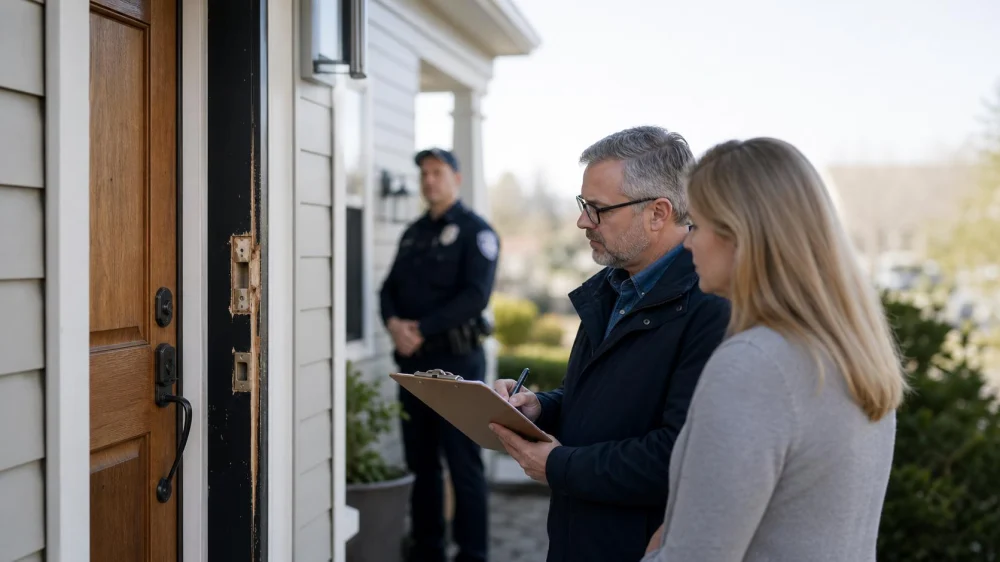
A damaged lock after a suspected break-in is a safety and evidence issue before it is a repair project. Move to safety, call law enforcement, and avoid touching or testing the entry until officials say you may proceed. Then photograph the condition, contact the property owner and insurer as required, arrange authorized temporary protection, and obtain an itemized plan for permanent repair. Replace the whole affected security system when damage extends beyond the lock.
In this guide
Put Safety First
If a door is open, broken, or unexpectedly unlocked, do not enter to investigate. Go to a safe location and call law enforcement. Follow the dispatcher's instructions. Call emergency medical or fire services for immediate hazards. Do not confront anyone, block an exit, or ask a neighbor to search the property.
Wait for officials to clear the property. A building may have broken glass, unstable frames, exposed wiring, animals, or other hazards. If you rent or share a building, alert the responsible property contact without broadcasting security details in a public message.

Preserve Evidence
Do not repeatedly operate the lock, straighten bent hardware, sweep debris, or move objects near the entry before law enforcement advises you. Well-intended cleanup can change useful evidence. Ask when you may photograph, cover, or repair the opening and whether investigators need any parts retained.
Once permitted, take wide photographs showing the doorway and closer views of the lock, strike, frame, hinges, glass, and nearby marks. Record the date, approximate discovery time, people contacted, report number, and instructions received. Do not post images that reveal key cuts, alarm details, camera positions, or vulnerabilities.
Notify the Right Parties
Contact the landlord, property manager, homeowners association, or building security when applicable. A tenant may lack authority to replace common or landlord-owned hardware, and a building may require compatible locks, master-keying, fire-rated components, or approved vendors. Ask who authorizes and pays for temporary and permanent work.
Notify the insurer promptly if you may make a claim. Ask what photos, estimates, reports, damaged parts, and mitigation receipts it needs. Do not delay reasonable steps needed to prevent further loss, but understand approval and documentation requirements. Coverage and deductibles depend on the policy and facts.
Assess the Entire Opening
Forced-entry damage often involves more than the cylinder. Ask a qualified locksmith or door professional to inspect the lock body, deadbolt, strike, screws, frame, jamb, hinges, door slab, glazing, and alignment. Cosmetic damage can conceal splitting or movement that prevents the bolt from seating correctly.
Also check whether the opening is part of a fire or emergency-egress system. Hardware changes must not trap occupants, obstruct required exit, or defeat accessibility and fire-safety features. Commercial, multifamily, and historic properties may require specialized review or permits.
Use Authorized Temporary Security
If permanent parts are unavailable, request a temporary plan that protects the opening without creating an exit hazard. The appropriate method depends on the door, occupancy, weather, and local rules. Temporary work should be documented, labeled with follow-up responsibility, and replaced promptly.
Ask who will monitor the property until it can be secured. Consider safe alternate lodging or restricted use of the affected area. Do not improvise barriers that block required egress, damage utilities, or create a fire hazard. For a shared entry, coordinate access for every authorized resident and emergency responder.
Approve a Permanent Repair Plan
Obtain an itemized written estimate. It should distinguish labor, lock hardware, door or frame work, finishing, keys or credentials, taxes, emergency charges, and follow-up visits. Confirm product identifiers, finish, keying plan, warranty, and estimated completion time.
Ask whether repair restores the original security level or whether compatible reinforcement is recommended. More hardware is not automatically better: the assembly must fit correctly and meet applicable building, fire, accessibility, tenancy, and insurance requirements. Get permission before altering property you do not own.
If keys were stolen or could be identified with the address, discuss rekeying or credential cancellation for every affected opening. Replacing a damaged latch alone may leave the lost key active elsewhere.
Reset Access Beyond the Door
Review garage remotes, building fobs, smart-lock codes, alarm credentials, spare keys, mailbox access, and any keys stored inside a stolen bag or vehicle. Revoke missing credentials through authorized systems and issue replacements deliberately. Preserve account logs when they may be relevant to the incident.
Change account passwords from a trusted device if a phone, password record, or connected-home controller may have been exposed. Use unique credentials and multifactor authentication where available. Do not erase devices or logs until investigators or insurers say they are no longer needed.
Closeout Records and Testing
After installation, test the latch and deadbolt with the door open and closed. The door should close normally, required exits should operate, and authorized keys or credentials should work. Confirm the count of new keys and whether any old key remains valid. Do not photograph or email key patterns.
Keep the police report information, before-and-after photos, estimates, invoices, part details, warranty, payment proof, and correspondence together. Record temporary measures and their removal. Share documents only with people who need them, and redact access details when submitting general claims records.
- Safety clearance obtained before entry or cleanup
- Evidence instructions followed and condition photographed
- Owner, manager, insurer, and building contacts notified
- Door, frame, strike, hinges, glass, and lock assessed
- Temporary protection approved and egress preserved
- Permanent estimate itemized and authorized
- Lost keys, fobs, codes, and remotes addressed
- Final operation tested and key count recorded
Frequently Asked Questions
Should I call a locksmith before police?
If you suspect a break-in or the scene may be unsafe, contact law enforcement first and follow its instructions. A locksmith can be arranged after access and evidence questions are addressed.
Must the whole door be replaced?
Not always. The answer depends on damage to the slab, frame, jamb, strike, hinges, glazing, and hardware. Ask for an assessment of the complete opening rather than only the visible cylinder.
Who pays in a rental?
Responsibility depends on the lease, local law, cause, insurance, and approvals. Notify the landlord promptly, preserve records, and avoid unauthorized alterations unless emergency rules clearly permit them.
Can I keep the damaged lock?
Ask law enforcement, the insurer, and the property owner before disposal. It may be evidence, required for a claim, or owned by someone else. Have its disposition noted on the invoice.
When should access codes be changed?
Change or revoke exposed credentials as soon as it is safe and authorized, while preserving any logs officials request. Include connected systems and shared users in the plan.
The right sequence after a break-in is safety, evidence, authorization, temporary protection, complete assessment, and documented repair. Exact duties depend on local law, the property, insurance, tenancy, and the investigation. Follow official instructions and use qualified professionals for the affected systems.

 Minute Key4.0 (5 reviews)
 KeyMe Locksmiths4.0 (51 reviews)
 KeyMe Locksmiths4.0 (146 reviews)
 KeyMe Locksmiths3.0 (17 reviews)
 KeyMe Locksmiths4.0 (28 reviews)
 KeyMe Locksmiths4.0 (23 reviews)
 Key Turns but Door Won’t Open? Diagnose the Lock Safely
 The Benefits of Installing Smart Locks With Remote Access Control
 Why Locksmith Near Me Reviews Matter Before Hiring a Professional
 Key Broke in the Lock? Safe Steps Before a Locksmith Arrives
 How to Protect Your Home from Forced Entry During Nighttime
 Contractor Lockbox Closeout: Remove Codes and Confirm Access