
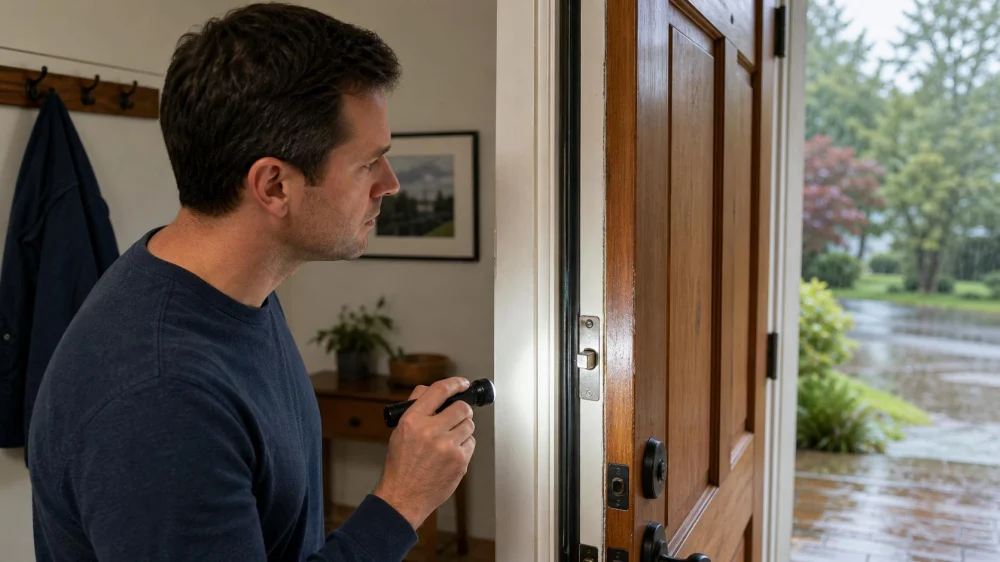
Why a Deadbolt Binds When the Weather Changes
In this guide
A deadbolt that turns smoothly in spring may bind during humid summer weather or a winter cold snap. The lock cylinder is not always the cause. Wood doors and frames exchange moisture, metal and composite components move with temperature, weatherstripping changes compression, hinges wear, and buildings settle. A small shift at the door edge can place the bolt against its strike instead of the center of the pocket. Comparing the lock with the door open and closed is the safest first distinction.

Quick answer
Open the door and operate the deadbolt without forcing it. If it moves freely open but binds closed, the likely issue is alignment among the door, hinges, strike, frame, threshold, or weatherstripping—not the cylinder alone. Check for loose hinges, rubbing, uneven gaps, compressed seals, and shallow bolt engagement. Do not force the key, file the bolt, or enlarge the strike before finding why alignment changed. Rapid movement, frame cracks, water damage, fire-rated doors, or persistent binding should be assessed by a verified locksmith or door professional.

How weather changes a door opening
Wood is hygroscopic: it gains and loses moisture as surrounding conditions change. Across the grain, those changes can alter width and thickness enough to make a close-fitting door rub. High indoor or outdoor humidity can swell an unsealed edge or frame; dry conditions can shrink components and enlarge gaps. Exterior exposure, finish condition, sun, rain, and the difference between indoor and outdoor climate all matter.
Metal, vinyl, and composite parts also expand and contract with temperature, though at different rates. A dark metal door heated by afternoon sun may behave differently from the same opening before sunrise. Foam weatherstripping can stiffen in cold weather, take a compression set, or push a door away from the stop after replacement. Frost, ice, or debris at a threshold can prevent full closure.
A healthy opening accommodates normal movement. Seasonal binding may reveal that clearances were already too tight, hinges are loose, the door lacks proper finish, or the strike was positioned at the edge of tolerance.
Compare operation open and closed
- Keep another exit available. Do not test a questionable exterior lock when you could become trapped outside.
- Open the door fully. Extend and retract the deadbolt with the thumbturn, authorized key, or normal electronic control.
- Notice resistance. Smooth open-door operation suggests the internal bolt path is functional; binding while open points toward the lock itself.
- Close the door gently. Do not slam or lift the handle. Try the bolt with normal pressure.
- Apply a light diagnostic push or pull. If modest pressure on the door lets the bolt move, the opening is misaligned or over-compressed. Do not make pushing the door a permanent operating method.
- Repeat at different times. Note temperature, rain, sun exposure, and indoor humidity.
Never use pliers on a key or excessive force on a thumbturn. A broken key or internal part turns an alignment issue into a lockout.
Read rubbing and alignment marks
Open the door and inspect the bolt, latch, strike plate, and frame under bright light. Fresh shiny areas on the top, bottom, or side of the bolt can show where it contacts the strike. Paint rubbed from the door edge, scuffed weatherstripping, or a polished threshold provides other clues.
Observe the reveal—the gap around the closed door—from inside. A narrowing gap near the latch-side top and a widening gap near the hinge-side top may indicate sag. A door tight along the entire latch edge may have swollen or the frame may have shifted. A localized rub near the bottom can involve threshold height, sweep, or hinge condition.
Do not mark the bolt with substances that can enter the lock or stain the finish. Painter's tape on an adjacent safe surface and clear photos are enough for documentation.
Check hinges before the strike
Hinges establish the door's position. A loose top hinge can let the latch edge drop, shifting both latch and deadbolt. Check whether screws are visibly loose, hinge leaves separate from the wood, pins rise, or knuckles wear. Support the door while evaluating heavy hardware; do not remove hinge screws from a closed exterior door without understanding the load.
Tighten only accessible loose screws with the correct tool and reasonable force. A screw that spins without tightening indicates a stripped or damaged hole, not a request for a larger random fastener. Long screws can contact wiring, pipes, glass, reinforcement, or concealed components, so fastener changes belong with a qualified professional.
Fire-rated doors, metal frames, self-closing doors, and commercial continuous hinges require listed components and controlled adjustment. Do not shim, bend, or substitute parts casually.
Look at weatherstripping and thresholds
New or swollen weatherstripping can hold the door slightly away from the stop. If the bolt works only while the door is pushed tightly inward or pulled outward, note which seal is resisting. Weatherstripping should seal without requiring excessive force or preventing the latch and deadbolt from fully engaging.
Inspect for folded, detached, painted-over, frozen, or oversized seals. Check the door sweep and threshold for grit, ice, warped material, and fasteners that have risen. Clean debris using methods safe for the finish. Adjust or replace components according to the door-system manufacturer rather than cutting away the seal until drafts return.
Water entering around the door can swell wood and damage the sill or framing. Correct gutters, flashing, drainage, and failed coatings as part of the repair. A locksmith can align hardware, but a building-envelope leak needs an appropriate contractor.
Inspect the strike and bolt pocket
The deadbolt should extend fully into a compatible strike pocket without scraping. Check for loose strike screws, a bent plate, paint buildup, debris, and a pocket that is shallower than the bolt's designed throw. Do not test depth with a finger while another person operates the lock.
If the bolt contacts one edge only after the door has sagged, correcting the hinges may recenter it without moving the strike. If a replacement strike was installed in the wrong position, it may need professional relocation and repair of old holes. Simply enlarging the opening can reduce material supporting the strike or expose weak framing.
The auxiliary plunger of a deadlatching latch must land on its strike surface, while the main latch enters the opening. Moving a combined strike without checking both parts can fix the deadbolt and defeat the latch's deadlocking function.
Use lubrication only for the right problem
Lubricant can help dry or contaminated internal components, but it cannot recenter a bolt that hits steel. First compare operation with the door open. If the bolt itself binds open, check the manufacturer's maintenance guidance. Locks may call for a specific dry, PTFE, graphite, or other product, and recommendations vary by cylinder and environment.
Do not mix lubricants or flood the keyway with general-purpose oil. Oil can attract dust, affect electronics, stain finishes, or conflict with manufacturer requirements. Clean the key and stop if it is bent, cracked, or heavily worn. A key that works poorly in every condition may be a key or cylinder issue separate from seasonal door movement.
Seasonal movement or structural warning?
A recurring small change tied to humidity or sun exposure may be seasonal. Record when it occurs and whether door gaps return to normal. Even seasonal movement deserves correction if the deadbolt cannot extend fully or occupants struggle to exit.
Seek a broader evaluation when the door changes rapidly, several doors or windows begin sticking, drywall or masonry cracks grow, floors slope, the frame separates, or water damage is visible. Foundation movement, framing problems, rot, impact, and concealed leaks are outside the scope of lock adjustment.
After a forced-entry attempt, do not assume rubbing is weather-related. The strike, jamb, fasteners, door edge, hinges, and lock body may have hidden damage. Preserve evidence and follow police, insurer, landlord, and repair guidance.
Protect security and emergency exit
A door that requires lifting, shoulder pressure, repeated turns, or a key from the inside is an egress concern. Occupants should be able to release required exit hardware without unusual effort, subject to local code and approved occupancy-specific rules. The International Code Council emphasizes ready operation of egress doors and accessibility requirements for handles, latches, and locks.
Do not add a surface bolt or second lock to compensate for misalignment. Extra devices may delay exit, confuse guests, or violate lease and code requirements. Repair the door so the intended listed hardware works correctly.
Check that children, older adults, and people with limited hand strength can operate the inside control. An electronic smart lock should still provide its designed emergency and mechanical operation; seasonal binding increases motor load and drains batteries faster.
Repairs to avoid
- Do not force the bolt: It can bend parts, break a key, or damage the frame.
- Do not file the bolt: Removing material alters a security component and treats the symptom.
- Do not enlarge the strike blindly: Diagnose hinges, seals, and movement first.
- Do not plane a finished door immediately: The door may shrink later, leaving a large gap and broken weather seal.
- Do not use random long screws: Concealed utilities, glass, reinforcement, and fire ratings matter.
- Do not disable the latch: A deadbolt is not meant to be the only part holding an open-and-close door between lock cycles.
When to call a professional
Call a verified locksmith or door professional when the bolt binds with the door open, the key or thumbturn feels rough, the strike or frame is damaged, the door is fire-rated, multipoint hardware is involved, or alignment corrections require drilling. A carpenter or door installer may be appropriate for a warped slab, failed frame, threshold, or weather seal. Water intrusion and structural movement need the relevant building specialist.
Give the professional a useful history: when binding began, weather conditions, whether the lock works open, which direction of pressure changes it, recent hardware or weatherstripping work, and photos of the gaps and rub marks. Ask them to confirm full bolt extension and inside egress after repair.
Frequently asked questions
Why does pushing the door make the deadbolt work?
Pressure temporarily aligns the bolt with the strike or compresses weatherstripping. The door, seal, hinges, or strike needs adjustment so ordinary operation does not require force.
Can humidity swell a fiberglass or steel door?
The slab may move less like solid wood, but wood framing, composite edges, seals, thresholds, and installation materials still respond to moisture and temperature.
Should I move the strike every season?
No. Repeated seasonal movement suggests the opening needs a durable alignment, moisture, finish, or installation correction. Multiple strike positions weaken the jamb.
Why does a smart lock report “jammed”?
The motor may be encountering bolt resistance from misalignment, low batteries, internal wear, or calibration. Test authorized manual operation with the door open and follow the manufacturer's troubleshooting steps.
Will dehumidifying the house fix the lock?
Manage indoor humidity for overall building and health needs, not solely to operate one lock. A binding exterior door still needs inspection for fit, finish, water entry, hinges, seals, and strike alignment.
Fix the cause before enlarging the opening
Weather-related deadbolt binding usually appears at the strike, but the cause may begin at the hinges, door edge, threshold, finish, frame, or weatherstripping. Compare open and closed operation, document gaps and rub marks, and correct loose or damaged support before altering security hardware. The finished door should close without force, allow the bolt to extend fully, preserve its seal, and open easily from inside in every season.


 KeyMe Locksmiths4.0 (19 reviews)
 Auto1locksmith4.0 (45 reviews)
 KeyMe Locksmiths5.0 (1 reviews)
 Minute Key3.0 (7 reviews)
 Minute Key4.0 (11 reviews)
 KeyMe Locksmiths2.0 (9 reviews)
 How to Protect Your Home From Lock Drilling and Picking Attempts
 Can a Locksmith Replace a Key Fob Near Me Cheaper Than a Dealership
 The Importance of Installing a Double Cylinder Deadbolt Lock
 The Importance of Installing a Smart Lock on Your Front Gate
 How to Protect Your Business From Employee Misuse of Keys
 Smart Lock Installation: What Every Homeowner Needs to Know