
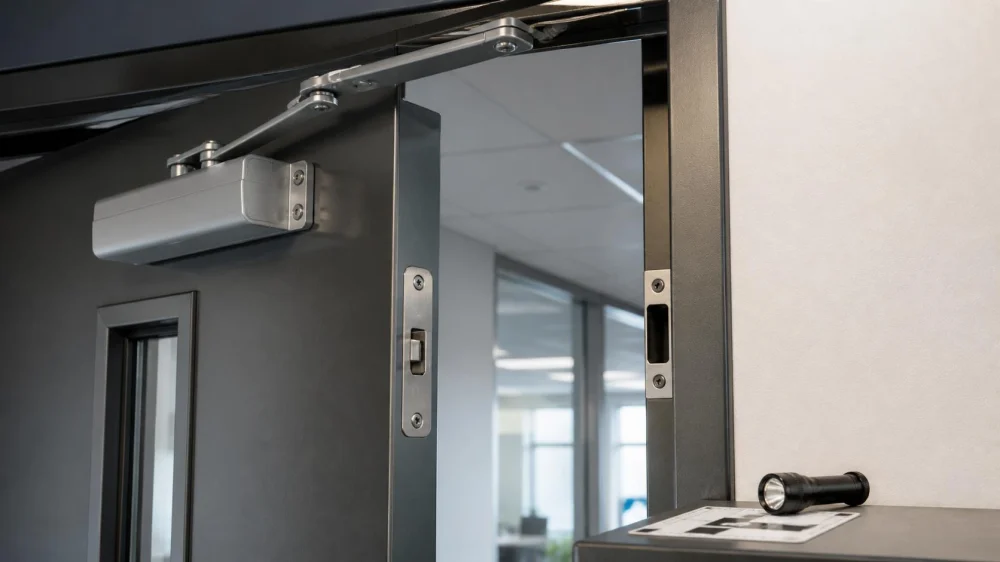
Door Closer and Lock Alignment: Test the Full Closing Cycle
On this page
Quick answer
A door that latches only when pushed may have a closer, hinge, weather seal, frame, latch, or strike problem—not just a bad lock. Test the door from several opening angles, record where it slows or rebounds, and compare operation with the latch held retracted. Keep fire and egress doors in serviceable condition, never wedge them open for convenience, and avoid random closer adjustments. A locksmith or door professional can balance closing force, latch speed, alignment, accessibility, and code requirements.
ABC Locksmith and Security
NapervilleDuPage CountyIllinois
25 S Washington St LL600, Naperville, IL 60540, USA
Why it matters
The closer controls the last part of travel that must overcome seals and place the latch in the strike. Excess force can slam the door, while too little force can leave it unsecured.
This United States security guide is general. Fire ratings, accessibility, egress, wind, pressure, door weight, electrified hardware, manufacturer limits, and local codes vary.
Practical checklist
- Test from fully open, half open, and a small angle.
- Observe sweep, final latch, rebound, slam, drag, and frame contact.
- Compare operation while gently holding the latch retracted.
- Inspect loose screws, hinge wear, seals, thresholds, strike marks, and closer leaks.
- Check whether fans, HVAC pressure, or wind changes the result.
- Confirm the door's fire, egress, accessibility, and security role.
- Record hardware labels and approved maintenance contacts.
Step-by-step plan
- Clear the swing path and keep fingers away from hinges and the closing edge.
- Cycle the door several times without helping it and note repeatability.
- Mark rub or strike contact with removable tape rather than filing parts immediately.
- Tighten only accessible fasteners that the manufacturer identifies for routine maintenance.
- Do not turn unlabeled closer valves or remove arms without instructions and authority.
- Have a qualified professional align hinges, frame, latch, strike, seals, and closer as one system.
- Retest closing, latching, key operation, egress, accessibility, and any access-control monitoring.
Save door location, date, weather and pressure conditions, opening angles, video, contact marks, closer and lock model, fire-door status, adjustments, parts, technician, and final test.
Limits and warning signs
Moving the strike may hide hinge sag or frame movement, and increasing closer force can create accessibility or impact problems. A successful latch once does not prove reliable operation.
Secure the opening and call qualified service if the door will not latch, slams, leaks closer fluid, binds on an egress route, defeats access control, or is a fire door with damaged hardware.
Frequently asked questions
Why does the door latch only when pushed?
The final closing force may be insufficient or alignment, seals, air pressure, hinges, or the strike may be interfering.
Can I speed up the closer myself?
Only with the exact manufacturer instructions and authority; small valve changes can have large effects.
Should I file the strike opening?
Not before diagnosing hinge, frame, latch, and closer alignment; irreversible filing can reduce security.
Why does operation change when HVAC runs?
Building pressure can resist or accelerate the door, so record the pattern for the technician.
Sources and evidence
The guide applies door-control, fire-door, egress, accessibility, hardware-alignment, and access-control principles: test the whole cycle, diagnose interacting components, avoid unapproved adjustment, and verify every life-safety function.
Conclusion and next steps
Test from multiple angles, document speed and contact, identify the door's safety role, and have a qualified professional correct the closer and alignment as a system before retesting every function.
 Minute Key4.0 (27 reviews)
 KeyMe Locksmiths4.0 (8 reviews)
 Tinder Lock & Access Solutions4.0 (48 reviews)
 KeyMe Locksmiths4.0 (4 reviews)
 KeyMe Locksmiths1.0 (1 reviews)
 KeyMe Locksmiths4.0 (58 reviews)
 The Benefits of Installing an Intercom System in Your Home
 Key Turns but Door Won’t Open? Diagnose the Lock Safely
 How to Protect Your Home From Lock Drilling and Picking Attempts
 The Importance of Installing a Keypad Lock in Your Home
 How to Protect Your Home from Common Burglary Techniques
 Exploring the Most Common Locksmith Services in the US